
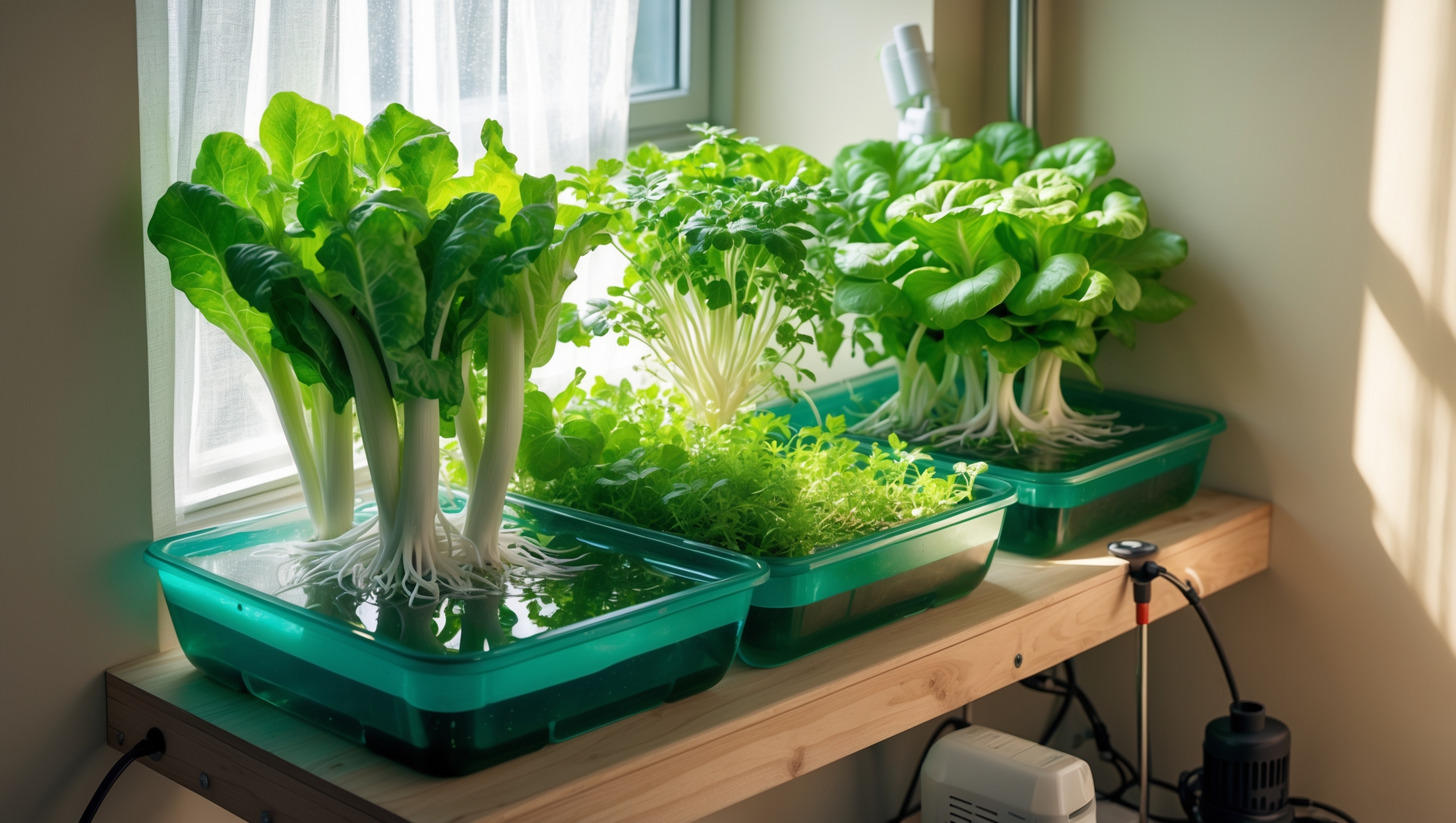
Introduction
Hydroponics—growing plants in water instead of soil—has been gaining traction among urban dwellers and homeowners alike. The idea of cultivating fresh lettuce, aromatic basil, or even strawberries right inside an apartment or a tiny house is appealing to many. However, a swirl of misconceptions often keeps beginners from taking their first step. Some think hydroponics is too complicated, while others believe it’s only for commercial growers or those with big budgets and sprawling spaces. If you’ve ever wondered whether home hydroponics is truly out of reach for small-space dwellers, this post is for you. We’ll debunk the most persistent myths, provide evidence-based explanations, and show you practical solutions to start your indoor garden—no backyard required. Whether you’re a city apartment renter or someone looking to maximize a sunny windowsill, get ready to discover how accessible and rewarding hydroponic gardening can be.
Myth 1: Hydroponics Requires a Lot of Space
Why This Myth Persists
Many people associate hydroponics with large commercial setups—rows of lettuce under industrial grow lights, occupying entire greenhouses. The idea that you need a spare room or garage to grow anything hydroponically is simply not accurate.
The Reality
Hydroponic systems are highly scalable. In fact, many are specifically designed for small spaces:
- Kratky jars: Single jars or containers can sit on a windowsill, growing herbs or lettuce.
- Vertical towers: These use minimal floor space and can fit in kitchens, balconies, or even next to your desk.
- Countertop systems: Plug-and-play hydroponic kits are available that fit neatly under cabinets or on shelves.
With thoughtful system selection, you can grow a surprising amount in less than a square meter.
Myth 2: Hydroponics Is Too Expensive for Home Gardeners
Why This Myth Persists
Images of high-tech equipment and LED arrays create the illusion that hydroponics requires a hefty investment. Many beginners are discouraged by the perceived startup costs.
The Reality
While commercial operations invest heavily in automation and climate control, home hydroponic setups can be very affordable. Here’s how:
- DIY Solutions: Mason jars, recycled bottles, or food-safe buckets can be repurposed for hydroponics.
- Basic Nutrients and Lights: Starter nutrient packs and budget grow lights are widely available.
- Minimal Infrastructure: Many herbs and leafy greens thrive in simple, non-circulating systems that require only occasional attention.
It’s possible to set up a small hydroponic herb garden for under $50. Over time, growing your own produce can also offset grocery costs.
Myth 3: Hydroponics Is Too Complicated for Beginners
Why This Myth Persists
Technical jargon—pH meters, EC readings, nutrient ratios—can make hydroponics seem intimidating. The fear of killing plants or making costly mistakes puts off many would-be growers.
The Reality
Modern hydroponic kits often come with easy-to-follow instructions. For simple crops like lettuce and basil, you only need to:
- Mix nutrients according to the package directions
- Check the water level weekly
- Monitor plant health visually
While advanced growers may tweak every parameter, most beginners can succeed with a “set-and-forget” approach. Plus, online resources and communities provide plenty of support.
Myth 4: Hydroponics Doesn’t Produce Tasty or Nutritious Food
Why This Myth Persists
Some believe that water-grown plants are bland or lack nutrients compared to soil-grown produce, assuming that soil is the only source of healthy minerals and flavor compounds.
The Reality
Hydroponics allows for precise control over nutrients. As long as plants receive a complete nutrient solution, they can be just as nutritious—if not more so—than soil-grown counterparts. In fact, many chefs and grocery stores seek hydroponic produce for its:
- Consistent flavor and texture
- Cleanliness (no soil residues)
- Year-round freshness
Studies show no significant nutritional difference between hydroponic and soil-grown greens when both are properly managed.
Myth 5: Hydroponics Uses Too Much Water and Electricity
Why This Myth Persists
The presence of pumps, lights, and nutrient reservoirs leads some to believe hydroponics is wasteful or not eco-friendly, especially in small indoor settings.
The Reality
Hydroponics is actually more water-efficient than traditional gardening. Closed-loop systems recirculate water, losing only a fraction to evaporation and plant uptake. Compared to soil gardening—which can lose up to 90% of irrigation water to runoff and drainage—hydroponics often uses just 10% of the water for comparable yields.
Regarding electricity, small-scale systems can be operated with:
- Low-wattage LED grow lights (many use less than a standard desk lamp)
- No electricity at all in passive systems (like Kratky setups)
With smart scheduling and energy-efficient equipment, hydroponics remains sustainable even in apartments.
Myth 6: You Can Only Grow Lettuce and Herbs
Why This Myth Persists
Most beginner-friendly hydroponic kits advertise leafy greens, leading to the impression that other crops are off-limits. This can be discouraging for those dreaming of tomatoes or strawberries.
The Reality
While lettuce and herbs are easiest to start with, the list of suitable hydroponic crops is long and growing. In small-space systems, you can successfully grow:
- Strawberries (in vertical towers or hanging systems)
- Cherry tomatoes and small peppers (in bucket or DWC setups)
- Dwarf beans, radishes, and even microgreens
The key is choosing compact or dwarf varieties and providing adequate light.
Myth 7: Hydroponic Plants Are Prone to More Pests and Diseases
Why This Myth Persists
Some assume that the moist environment of hydroponics encourages mold, root rot, or insect infestations—especially indoors.
The Reality
Hydroponic plants can be less susceptible to many soil-borne pests and diseases. With no soil, threats like fungus gnats, nematodes, and certain fungal pathogens are minimized. Key best practices include:
- Keeping the system clean and sanitized between crops
- Ensuring adequate airflow to prevent mildew
- Monitoring for symptoms and addressing issues early
In small, indoor setups, pest outbreaks are rare and easier to manage without harsh chemicals.
Myth 8: Hydroponics Is Not Organic or “Natural”
Why This Myth Persists
The perception that hydroponics is “unnatural” stems from the absence of soil and the use of manufactured nutrients. Some believe this makes hydroponic produce less wholesome or eco-friendly.
The Reality
Hydroponic nutrients contain the same elemental minerals plants extract from soil—just delivered in a water-soluble form. There are organic-certified nutrient lines available for those who wish to avoid synthetics. Additionally, hydroponics avoids pesticides and reduces the need for herbicides, making it a clean, sustainable option for homegrown food.
Practical Tips for Small-Space Hydroponic Success
Choose the Right System
Select a system that matches your available space and desired crops. Start simple with a Kratky jar for herbs or a small countertop ebb-and-flow kit for leafy greens. As you gain experience, consider expanding to vertical towers or nutrient film technique (NFT) rails for higher yields.
Optimize Lighting
Natural sunlight is ideal, but most homes will need supplemental lighting, especially in winter. Invest in a full-spectrum LED grow light that fits your system size. Position lights 6–12 inches above the plants and run them for 12–16 hours a day, depending on crop requirements.
Monitor Water and Nutrients
Check water levels weekly and top off with fresh, diluted nutrient solution as needed. While a pH meter is helpful, test strips are a budget-friendly alternative for beginners. Aim for a pH of 5.5–6.5 for most crops.
Maintain Cleanliness
Prevent algae and disease by cleaning containers and replacing water between crop cycles. Use food-safe hydrogen peroxide or a vinegar rinse for disinfection.
Start with Easy Crops
Lettuce, basil, mint, and arugula are forgiving for first-time hydroponic gardeners. Once you’re comfortable, experiment with cherry tomatoes, dwarf peppers, or strawberries.
Case Example: The Windowsill Salad Bar
Consider “Nina,” who lives in a 500-square-foot city apartment with only a sunny kitchen window. She started with three quart-sized mason jars, a bag of hydroponic nutrients, and basil cuttings from the grocery store. After two weeks, she was harvesting fresh herbs for pasta and salads, with no pumps or lights needed. Encouraged by her success, Nina added a small LED panel and began growing baby lettuce and arugula. Her monthly grocery bill dropped, and she enjoyed the process of tending to her miniature, soil-free garden—proving hydroponics is both accessible and rewarding in the tiniest of spaces.
Conclusion
Home hydroponics is often overshadowed by myths that make it seem out of reach for most people—especially those with limited space, time, or technical know-how. As we’ve explored, these myths don’t hold up against the realities of modern hydroponic technology and the experiences of countless small-space gardeners. Today’s systems are compact, affordable, and easy to use. A few jars, a handful of seeds, and a sunny spot are often all it takes to begin harvesting your own fresh greens, herbs, or even strawberries.
The benefits go beyond just convenience or novelty. Hydroponics enables anyone—no matter where they live—to enjoy clean, nutritious, and flavorful produce, reduce food miles, and reconnect with the cycle of growth. It’s a practical, sustainable option for renters, condo owners, and those with little or no outdoor space. By debunking these common myths, we hope you feel empowered to give hydroponics a try. Start small, learn as you grow, and discover the joy of bringing a garden into the heart of your home.
Remember, the only real limitation is your imagination—and perhaps a bit of available countertop. The world of home hydroponics is open to you, whether you have a sprawling greenhouse or just a single windowsill.
If I want to try growing strawberries hydroponically in my dorm room, what kind of timeline should I expect from setup to harvest in a small-scale system?
For hydroponic strawberries in a small dorm setup, you can expect roughly 4 to 6 weeks for plants to establish after transplanting young seedlings, and then about 4 to 6 more weeks before you start harvesting ripe berries. In total, plan for around 2 to 3 months from setup to your first harvest, depending on growing conditions.
After setting up a vertical hydroponic tower in a tiny kitchen, how long does it usually take to see your first harvest of herbs or lettuce? I’m curious about the general time frame for beginners.
With a vertical hydroponic tower, most herbs and lettuce varieties can be ready for their first harvest in about 3 to 6 weeks after planting, depending on the type and growing conditions. You’ll likely notice fast progress, especially if your tower gets enough light and you keep the water and nutrients balanced.
I’m curious about the vertical tower systems you mentioned for small spaces. Do they need special lighting, or can they work with just natural sunlight from a window?
Vertical tower systems can work with natural sunlight if you have a bright, sunny window that gets several hours of direct light each day. However, in most indoor small spaces, supplemental grow lights are recommended to ensure plants get enough light for healthy growth, especially during darker months or if sunlight is limited.
You mentioned that some hydroponic systems like Kratky jars are affordable and small. Could you provide a rough estimate of the initial cost to set up a basic system for growing herbs on a kitchen windowsill?
For a basic Kratky jar system to grow herbs on your windowsill, you can expect to spend around $10 to $20 per jar. This covers a glass jar, net cup, hydroponic nutrients, and some starter seeds. If you want to grow several herbs, just multiply that cost by the number of jars you plan to set up.
It sounds like Kratky jars could be good for beginners with limited room. Are there certain herbs or veggies that do noticeably better in Kratky jars versus the other systems mentioned?
Kratky jars are especially well-suited for fast-growing, low-maintenance herbs like basil, mint, and cilantro. Leafy greens such as lettuce and arugula also thrive. These plants don’t require much space or complex nutrient management, making them ideal for Kratky compared to more demanding crops or larger hydroponic systems.
You mention hydroponic systems being scalable for small spaces, but I’m wondering how much daily attention these setups need. For someone with a busy schedule, is it realistic to keep up with the maintenance?
Hydroponic systems actually require less daily attention than many people expect. Once set up, most small-scale systems only need a quick daily check to ensure water levels and nutrient solutions are adequate. Automated timers for lights and pumps can further reduce hands-on maintenance, making it manageable for someone with a busy schedule.
You mentioned vertical towers fitting in tight spaces. Could you share any tips for setting one up in an apartment without much natural light? I’m curious about what kind of supplemental lighting and maintenance would be needed.
For apartments with limited sunlight, using full-spectrum LED grow lights is best for vertical hydroponic towers. Position the lights about 6–12 inches from your plants and set a timer for 12–16 hours daily. Choose compact, energy-efficient lights to save space. Maintenance includes checking water levels, topping up nutrients, and ensuring the lights stay clean and dust-free for maximum efficiency.
I live in a really small apartment and only get sunlight from one window. You mention Kratky jars and countertop systems—would either of those work for leafy greens if I just have a windowsill, or do I need to invest in extra lighting?
Both Kratky jars and countertop hydroponic systems can work for leafy greens on a sunny windowsill, but light is key. If your window gets several hours of direct sunlight, you should have decent results. However, if sunlight is limited or indirect, adding a small grow light will help your plants thrive and grow more consistently.
Could you clarify if starting with a Kratky jar on a windowsill can realistically provide enough herbs for regular cooking, or is a larger vertical system usually needed for meaningful yields?
A Kratky jar on a windowsill is a great way to start and can give you small amounts of fresh herbs, ideal for garnishing or adding flavor to dishes. However, if you want a steady, larger supply for regular cooking, you’ll likely need a bigger or vertical hydroponic setup to get meaningful yields.
What would be a good starting system for someone who wants to try hydroponics on a windowsill without investing a lot up front or making a mess? Any tips to avoid common beginner mistakes?
A simple Kratky system is ideal for beginners on a windowsill. All you need is a jar or food-safe container, a net cup, and a nutrient solution. Choose easy greens like lettuce. To avoid mess, use a lid to reduce spills and keep the water topped up. Start with just a few plants and don’t overfertilize—less is more when you’re learning.
How long does it usually take for something like basil or lettuce to start growing enough to harvest when using one of these compact hydroponic systems at home?
Basil and lettuce usually grow quite quickly in compact home hydroponic systems. You can typically begin harvesting lettuce in about 3 to 4 weeks after planting the seeds, and basil is often ready for its first harvest after about 4 to 5 weeks. Growth rates can vary depending on light, temperature, and the system you use.
I’m curious about the countertop hydroponic kits you mentioned for tight spaces. Are there particular brands or models that are easier for absolute beginners to manage, especially if they don’t have much gardening experience?
Absolutely, countertop hydroponic kits are a great choice for beginners with limited space. Brands like AeroGarden and Click and Grow are especially user-friendly, offering models with automated lighting and reminders for watering or adding nutrients. These systems are designed to make indoor gardening almost effortless, even for someone with no prior experience.
I noticed you mentioned vertical towers as a space-saving option for hydroponics. How difficult are they to set up for someone with no previous gardening or DIY experience, and do they require any special maintenance compared to Kratky jars?
Vertical hydroponic towers are generally more complex to set up than Kratky jars, especially for beginners. They often require some assembly, a pump for water circulation, and regular monitoring for leaks or clogs. Maintenance involves checking the water pump, cleaning the system periodically, and ensuring plants receive even light and nutrients. Kratky jars are simpler, needing only basic refilling, but towers make better use of vertical space.
If I wanted to start hydroponics next to my work desk, what would you recommend for minimizing mess or water leaks? I’ve read about different systems, but am not sure which is the most practical for that kind of space.
For a workspace, a compact, closed-system hydroponics unit like a Kratky jar or a small desktop wick system works well. These minimize mess because they don’t need pumps or active water flow, and the reservoirs are sealed to reduce spills. Use containers with tight-fitting lids and keep absorbent mats underneath as a precaution.
Could you go into more detail about how vertical towers work in tiny spaces like a dorm room? I’m wondering how much produce you can actually grow on one compared to a regular countertop hydroponic kit.
Vertical hydroponic towers are designed to maximize space by stacking multiple plant sites upward, so you can grow more in a small footprint like a dorm room. Compared to a typical countertop hydroponic kit, which might fit 6 to 12 plants, a compact tower can often support 20 or more. The actual yield depends on the types of plants you choose—leafy greens and herbs do especially well. Towers also make use of vertical airflow and light, helping your plants grow efficiently even in limited space.
With countertop hydroponic kits, are there specific types or brands you’ve found that fit well in really tight kitchens? Also, how do you manage maintenance if you’re short on space and time?
Countertop kits like AeroGarden Sprout, Click & Grow Smart Garden 3, and iDOO are compact and popular for very small kitchens. They’re designed to fit in tight spots and are mostly plug-and-play. For maintenance, choose kits with self-watering features and built-in lights—just top up the water and nutrients every week or two, and trim plants as needed. This keeps upkeep quick and manageable.
Could you explain more about the Kratky jars mentioned? I live in a dorm, so I’m interested in how much maintenance they actually need compared to other hydroponic systems for small spaces.
Kratky jars are a simple, passive hydroponic method—perfect for dorms. They don’t need pumps or electricity. You just fill the jar with nutrient solution, place the plant in a net cup, and let the roots grow down. Maintenance is minimal: just top up nutrients and water every few weeks, unlike other systems that often require daily checks or moving parts.
The article points out that hydroponics isn’t just for those with lots of space or a big budget. Can you give an idea of the startup and ongoing costs for a simple windowsill hydroponic system?
A basic windowsill hydroponic setup can start at around $30 to $60 for a small kit, which usually includes a container, growing medium, and nutrients. Monthly costs for seeds, nutrients, and water are minimal, typically under $10. It’s quite affordable compared to larger systems.
You mention vertical towers as an option for small spaces. Can those be assembled with basic tools at home, or do they usually come ready to use? I’m wondering how much DIY is involved for a beginner.
Vertical hydroponic towers are available both as pre-assembled kits and as DIY projects. Some kits are ready to use right out of the box with minimal setup, while DIY options may need basic tools and some assembly. For beginners, starting with a simple kit can make things easier, but if you enjoy hands-on projects, there are lots of beginner-friendly DIY guides that use common household tools.
How much time does it typically take to maintain a small-scale hydroponic setup, like a few jars on a windowsill, compared to traditional potted plants? I’m hoping to keep the upkeep minimal.
A small hydroponic setup, such as jars on a windowsill, usually takes about 10–15 minutes per week for basic upkeep. This includes checking water levels, adding nutrients, and occasional cleaning. In comparison, traditional potted plants might require similar time for watering and care. Hydroponics can actually be simpler since there’s no soil mess and less frequent watering is needed.
I live in an apartment with only a single sunny windowsill available. Would a Kratky jar system be enough to successfully grow herbs year-round, or do I need additional lighting for consistent results?
A Kratky jar system can work well for growing herbs on a sunny windowsill, especially with herbs like basil or mint. However, during winter or on cloudy days, natural light might not be enough for consistent growth. For year-round success and stronger plants, consider supplementing with a small LED grow light if your windowsill doesn’t get at least 6 hours of direct sunlight daily.
For someone worried about the initial cost, are there specific DIY hydroponic setups you recommend that make it easy and affordable to start growing greens indoors?
If you want to keep costs low, try a simple DIY Kratky setup using recycled containers like jars or plastic bins, some net cups, and a basic nutrient solution. This no-pump system is easy to assemble and perfect for growing leafy greens indoors on a budget.
Could you share more about how much space is actually needed for those vertical hydroponic towers? I run a small bakery with limited counter room and am curious about fitting one alongside our existing kitchen setup.
Vertical hydroponic towers are designed for tight spaces and typically require a footprint of about 1 to 2 square feet. Most models stand around 4 to 6 feet tall, so they fit well in corners or unused areas. As long as you have enough height clearance and a nearby power outlet, you should be able to fit one alongside your kitchen equipment without much trouble.
I’m interested in trying hydroponics on a small scale in my apartment. Could you share any tips on choosing between Kratky jars and vertical tower systems for very limited windowsill space?
For very limited windowsill space, Kratky jars are usually easier to start with. They take up less room, require minimal setup, and are great for smaller plants like herbs or lettuce. Vertical tower systems can grow more plants but may be too bulky unless you have enough vertical clearance and stable light. If you’re just starting, try a few Kratky jars first to see how they fit your space and routine.
Could you provide a ballpark estimate for the initial investment required to start with a basic Kratky jar or countertop kit for beginners? I’m curious how affordable it really is for a small-scale setup.
For a basic Kratky jar setup, you can expect to spend around $10–$25 using household jars and simple materials. If you prefer a countertop hydroponic kit, starter options usually range from $40 to $100, depending on the features and brand. Both options are quite accessible for beginners.
If I wanted to try the Kratky jar method on my windowsill, how long does it typically take to see results with herbs like basil, and is there a lot of ongoing work required?
With the Kratky jar method, you can usually see basil seedlings emerge within a week and notice substantial growth within 3 to 4 weeks. The ongoing work is minimal—just make sure the jar has enough water and nutrients, and check occasionally for algae or pests. It’s a low-maintenance approach perfect for beginners.
If I start with a Kratky jar system on my windowsill, how much maintenance will it actually require compared to caring for potted plants in soil? I’d love to know what daily or weekly tasks are involved.
A Kratky jar system generally needs less daily maintenance than soil potted plants. With Kratky, after you set up the water and nutrients, you mainly just top off the water every week or two and check for algae or root issues. You won’t need to water daily or worry about soil drying out. Just monitor water levels and plant health each week.
I rent a small apartment with just a north-facing windowsill. Would a Kratky jar still work, or would I need supplemental lighting for decent growth?
With a north-facing windowsill, natural light is usually limited, which can make it tough for most plants to thrive in a Kratky jar. For decent growth, especially if you want herbs or leafy greens to do well, you’ll likely need supplemental lighting like a small LED grow light.
I’m living in a small apartment and only have a windowsill that gets a few hours of sun each day. Would a Kratky jar system actually work for herbs in that kind of limited light, or do you recommend using supplemental LED lights?
A Kratky jar system can work on a windowsill, but herbs generally need more consistent light than a few hours per day to thrive. You’ll likely get better growth and healthier plants if you use supplemental LED lights, especially for light-loving herbs like basil or oregano.
You mentioned that hydroponic setups can be really scalable for tiny spaces. How much fresh produce could I realistically expect to harvest from something like a vertical tower in a month?
A vertical hydroponic tower in a small space, such as on a balcony or countertop, can yield about 20–40 servings of leafy greens or herbs per month, depending on the number of planting sites and the varieties grown. Fruiting crops like cherry tomatoes or peppers will provide less per plant but can still offer several harvests throughout the month. Results will vary based on light, temperature, and care.
Could you explain a little more about how Kratky jars work for beginners? Are there specific plants that are easiest to start with using this method on a windowsill?
Kratky jars are a simple hydroponic method where plants grow with their roots suspended in a nutrient solution, no pumps or electricity needed. As the water level drops, roots get air. For beginners, leafy greens like lettuce, spinach, or basil do very well in Kratky jars on a sunny windowsill because they grow quickly and don’t need deep containers.
You mention that vertical towers and countertop systems can fit in really small spaces. Are there specific plant varieties that tend to do better in these compact setups compared to others?
Yes, some plants are especially well-suited for compact hydroponic systems like vertical towers and countertop units. Leafy greens such as lettuce, spinach, and arugula thrive in these setups. Herbs like basil, mint, and cilantro also do well. Smaller fruiting plants, such as strawberries, can work, but larger crops like tomatoes usually need more space.
I’m interested in starting with a countertop hydroponic kit since my budget is pretty limited. What are some hidden or ongoing costs besides the initial system purchase, like nutrients or electricity?
Beyond the initial purchase of a countertop hydroponic kit, you’ll need to budget for nutrients, which must be replenished regularly, and replacement grow lights or bulbs over time. Electricity costs are generally low for small setups, but they can add up if you run lights for many hours daily. You may also occasionally need pH testers or calibration solutions.
Can you explain more about how vertical towers work in really tight spaces, like a dorm room or a studio apartment, and whether they need any special lighting?
Vertical hydroponic towers are designed to use height instead of floor space, making them ideal for places like dorm rooms or studio apartments. They stack plant sites upwards so you can grow several plants in a small footprint. Most indoor setups do require special grow lights, since natural sunlight is often limited in small or windowless spaces. LED grow lights are popular because they’re energy-efficient and can be hung or attached to the tower.
If I wanted to start with a Kratky jar on my windowsill, what plants are easiest for beginners, and how long does it usually take to see results?
Lettuce and basil are two of the easiest plants to grow in a Kratky jar on your windowsill. You’ll typically see seedlings sprout within a week, and harvestable leaves in about 3 to 5 weeks, depending on light and temperature.
You mentioned Kratky jars and vertical towers for small spaces—do you have any recommendations on which herbs or veggies tend to do best in these compact hydroponic setups?
For Kratky jars, herbs like basil, mint, cilantro, and lettuce varieties do very well—they grow quickly and don’t need much space. In vertical towers, you can expand to include chard, spinach, and small peppers, along with herbs. Root vegetables are best avoided, as they need more room.
Could you share more about your experience with vertical tower systems in really tight spaces, like a studio apartment? I’m curious how much daily maintenance is actually needed compared to something like a Kratky jar on the windowsill.
Vertical tower systems can fit surprisingly well in studio apartments, taking up only about 2 square feet of floor space. They require a bit more daily attention than a Kratky jar—mainly checking water levels, adding nutrients, and ensuring the pump is running. Expect to spend 5–10 minutes a day, versus almost no daily tasks with Kratky jars. Towers do offer much higher yields if you’re up for the routine.
I’m curious how much maintenance is involved with these smaller hydroponic setups like the countertop kits. Do they require daily attention, or are they fairly hands-off once established?
Countertop hydroponic kits are designed to be quite low-maintenance. Once established, they usually only need you to top off the water and nutrients every week or so and check on the plants’ growth. Daily attention isn’t necessary—just occasional monitoring to ensure everything is running smoothly.
You talk about plug-and-play countertop systems for hydroponics, but are there DIY alternatives that work just as well for someone on a budget? I’d love tips for making my own setup.
Absolutely, you can create effective DIY hydroponic systems using basic materials like plastic storage bins, net pots, and aquarium air pumps. The Kratky method is especially simple—just suspend plants above a nutrient solution without needing a pump. Look for inexpensive LED grow lights and use household items like recycled jars for smaller setups. Focus on keeping the system clean and ensuring your plants get enough light and nutrients.
How much sunlight do Kratky jar setups typically need if I want to grow herbs on a windowsill, or do I need to invest in grow lights for good results?
Kratky jar setups for herbs do best with at least 6 hours of direct sunlight per day. If your windowsill doesn’t get enough strong, consistent light—especially in winter—herbs may grow slowly or become leggy. In that case, a small LED grow light can really boost your results and help herbs thrive year-round.
Could you elaborate a bit more on how vertical towers might fit into a typical apartment? I’m curious about the noise or maintenance needs for someone living in a small city space.
Vertical hydroponic towers are designed to save space, so they can fit comfortably in a corner or near a window in most apartments. They generally produce minimal noise—mainly a soft hum from the water pump. Maintenance is manageable: you’ll need to top up water, check nutrient levels weekly, and clean the system every few weeks to prevent clogs or algae.
You mentioned that countertop hydroponic kits can fit under cabinets. Can these systems really sustain things like basil or lettuce year-round, or do they need to be rotated out seasonally?
Countertop hydroponic kits are designed to provide consistent water, nutrients, and light, so you can grow herbs like basil or greens like lettuce all year round. There’s no need to rotate them seasonally since they aren’t affected by outdoor temperatures or daylight.
You mentioned that countertop hydroponic kits can fit under cabinets, but do these systems make much noise or require a lot of maintenance for someone without much free time?
Countertop hydroponic kits are designed to be quiet, usually making only a soft hum from their pumps or fans, which most people find unobtrusive. Maintenance is minimal—main tasks include topping up water, adding nutrients every week or two, and occasionally cleaning the tank. They’re a good fit for someone short on free time.
You say hydroponic systems can fit under cabinets or on shelves, but how much light would someone realistically need if their apartment windows don’t get much sun? Are there budget lighting solutions that actually work?
If your apartment doesn’t get much natural sunlight, you’ll need to use grow lights. For most small hydroponic setups, a basic LED grow light that provides full-spectrum light works well and is energy efficient. You can find compact, budget-friendly models for under-cabinet or shelf use. Aim for 12–16 hours of light per day to keep plants healthy.
You mention that hydroponic systems like Kratky jars and vertical towers can fit in really small spaces. How much natural light do these setups typically need, and do you have recommendations for lighting if my apartment doesn’t get much sun?
Kratky jars and vertical towers generally need about 6-8 hours of bright light daily for healthy plant growth. If your apartment doesn’t get much sunlight, consider using full-spectrum LED grow lights, which can be set up above your plants. Adjustable clip-on or bar-style grow lights work well for small spaces and let you control intensity and duration.
You mentioned plug-and-play countertop hydroponic kits for small spaces. Are those generally more cost-effective in the long run compared to building a DIY system with jars and grow lights?
Plug-and-play countertop hydroponic kits offer convenience and usually include everything you need, but they tend to have a higher upfront cost and may require branded supplies for upkeep. DIY systems with jars and grow lights can be cheaper initially and more customizable, but they may need more troubleshooting and maintenance. Over time, DIY setups are usually more cost-effective if you’re comfortable with hands-on work.
After debunking the space and budget myths, what beginner-friendly steps would you suggest for someone who wants to start with hydroponics but has no prior gardening experience?
If you’re new to hydroponics, start with a simple system like a deep water culture or a small hydroponic kit designed for beginners. Choose easy-to-grow plants like lettuce or herbs. Measure and maintain water, light, and nutrients, and keep your setup clean to prevent issues. Most kits come with clear instructions, making the process manageable even for complete beginners.
I’m curious if there are recommended starter kits or setups for someone on a very tight budget who still wants to try vertical hydroponics indoors, as the article mentions countertop and vertical systems.
If you’re on a tight budget, you can find simple vertical hydroponic starter kits designed for small spaces—some start at around $30–$50. Stackable tower kits or DIY PVC pipe setups are both affordable and space-efficient. You can also repurpose plastic bottles for a homemade vertical system using basic hydroponic nutrients and a small grow light.
You mention that some hydroponic setups like vertical towers can fit in a kitchen or even by a desk. Do these require any special maintenance compared to the countertop kits, especially for someone who’s new to gardening?
Vertical tower hydroponic setups often need a bit more attention than smaller countertop kits. You’ll likely have to check water levels and nutrient solutions more often and ensure the pump is working properly. Cleaning might also take more time. However, most modern towers are still user-friendly for beginners, and routine tasks quickly become easy with practice.
I live in an apartment with only one small, north-facing window. Would Kratky jars or vertical towers work in low-light conditions, or do I need to invest in extra lighting for a successful hydroponic setup?
With just a small north-facing window, the available natural light might not be enough for most hydroponic plants to thrive, especially with Kratky jars or vertical towers. You will likely need supplemental grow lights to ensure healthy growth and good yields in your apartment.
If I wanted to start with a countertop hydroponic kit, how much fresh produce could I realistically expect to harvest each month in a limited space?
With a countertop hydroponic kit, you can typically expect to harvest enough fresh herbs, greens, or small veggies to supplement a few meals each week. On average, you might get 4 to 8 ounces of herbs or leafy greens per month, depending on the plant types and kit capacity.
You mentioned vertical towers and countertop systems for small spaces, but I’m wondering how much daily maintenance these options actually require compared to a traditional potted plant. Are they more time-consuming or relatively hands-off once set up?
Vertical towers and countertop hydroponic systems are generally quite hands-off once set up. You’ll spend a few minutes each day checking water levels, adding nutrients, and ensuring the pump and lights are functioning. Compared to traditional potted plants, you might actually save time since you don’t need to water as often and there’s less mess from soil.
I’m curious about the Kratky jars you mentioned for windowsills. How much maintenance do they actually need day to day, especially if you’re new to hydroponics?
Kratky jars are very low-maintenance compared to other hydroponic methods. Once you set them up with water and nutrients, you mostly just top up the water if it gets low and occasionally check for algae or mold. For beginners, this means just a quick look every few days—no pumps or daily adjustments needed.
You mentioned hydroponic systems being highly scalable for small spaces—how much time does it usually take for someone new to get their first successful harvest indoors?
For beginners using indoor hydroponic systems, it typically takes about 4 to 6 weeks to see your first successful harvest, depending on the crop you choose. Leafy greens like lettuce and herbs grow faster, while fruiting plants like tomatoes take longer. Most people find hydroponics easy to manage once they get used to routine tasks like checking water and nutrients.
You mentioned countertop hydroponic kits as an option for small spaces. Are these kits generally a good entry point for beginners, or is it better to start with a DIY system like a Kratky jar?
Countertop hydroponic kits are usually a great starting point for beginners because they’re easy to set up and often include everything you need. DIY Kratky jars are also simple but may require a bit more hands-on assembly and sourcing materials. If you want convenience and guidance, a kit is a solid choice to start with.
You mention Kratky jars and countertop systems for small spaces—do these methods work equally well for growing larger plants like tomatoes, or are they mainly suited for herbs and lettuce?
Kratky jars and most countertop hydroponic systems are best suited for smaller plants like herbs and lettuce. Larger plants such as tomatoes usually need more root space, support, and sometimes aeration, which these simple systems may not provide. For tomatoes, consider larger deep water culture or bucket systems.
Could you explain more about how vertical towers work for hydroponics in really tight spaces, like a small apartment balcony? Are there any challenges with light or airflow when using these towers indoors?
Vertical hydroponic towers stack plants upward, allowing you to grow many in a small footprint, perfect for balconies or tight indoor spaces. One challenge is making sure all plants get enough light, especially indoors, so you might need to use LED grow lights. Good airflow is also important to prevent mold or mildew—small fans can help circulate air around the tower.
I see you mention Kratky jars and countertop systems for small spaces. Are there certain types of edible plants that perform significantly better than others in these compact hydroponic setups?
Yes, leafy greens like lettuce, spinach, and basil tend to thrive in Kratky jars and small countertop hydroponic systems. Herbs such as cilantro and parsley also do well. Larger fruiting plants like tomatoes or peppers usually require more space and support, so they’re less suited to these compact setups.
You mention Kratky jars for growing on a windowsill. If I wanted to start with several jars at once, how much time and effort am I looking at to keep them going each week?
Maintaining several Kratky jars is pretty simple. After the initial setup, you’ll likely spend 10 to 20 minutes per week checking water levels, topping up nutrient solution as needed, and making sure plants get enough light. There’s no need for pumps or frequent adjustments, so it’s quite manageable even with multiple jars.
I live in a small city apartment with only one reasonably sunny windowsill. The article mentions Kratky jars for herbs or lettuce—how many jars could realistically fit on a standard windowsill, and is there a risk of mold if they’re crowded together?
On a standard windowsill, you could usually fit 3 to 5 Kratky jars, depending on their size and the available space. It’s important to leave a little room between jars for airflow, which helps prevent mold. Avoid letting water or leaves touch between jars, and check the area regularly for excess moisture.
Can you explain a bit more about how the countertop hydroponic kits work compared to vertical towers? I’m trying to decide which would be more manageable in a busy family kitchen with limited counter space.
Countertop hydroponic kits are compact systems that typically sit on a kitchen counter, making them easy to monitor and tend, but they do take up horizontal space. Vertical towers, on the other hand, use vertical height to grow more plants in a smaller footprint, so they’re ideal if you have limited counter space but can spare a little floor or corner area. For a busy family kitchen, a slim vertical tower might be more manageable if counter space is tight.
I’m curious what the most cost-effective way to get started would be for someone with a really tight budget. Are there any DIY options using common household items for hydroponics in small spaces?
Absolutely, you can start a simple hydroponics system with items like plastic storage containers or old buckets as the reservoir, and use cleaned plastic bottles or cups as plant holders. A basic aquarium air pump can supply oxygen, and inexpensive LED shop lights work for growing most herbs and greens indoors.
I live in a small apartment and only have a single sunny windowsill. Are Kratky jars the best option for a total beginner, or would a countertop kit be easier to manage with kids around?
With kids around, a countertop kit might be easier and tidier to manage since it often comes with a stable frame and built-in lights. Kratky jars are simple and inexpensive, but they can tip easily and need manual monitoring. Countertop kits usually have clearer instructions and safety features, making them more beginner- and family-friendly.
I run a small bakery and have limited counter space, so I’m curious if the Kratky jars or vertical towers would be better suited for growing fresh herbs like basil and mint. Do you have recommendations for which method works best for quick harvests in tight spaces?
For a small bakery with limited counter space, vertical towers are usually the better option. They let you grow more herbs like basil and mint in a compact footprint by stacking plants upward. Towers also make harvesting easier and can produce quick yields if you use fast-growing varieties. Kratky jars are simple but tend to take up more horizontal space per plant. Go with a slim tower if you want a steady supply of fresh herbs without sacrificing work area.
You mentioned that hydroponic setups can be budget-friendly for small spaces. Can you give some examples of initial costs for starting with something like vertical towers versus a basic jar system?
A basic jar hydroponic system can cost as little as $10 to $30, mostly for jars, net pots, and nutrients. In contrast, a compact vertical tower setup usually starts around $80 to $200, depending on materials or kits. The jar method is great for beginners and tight budgets, while towers allow for more plants in the same footprint.
I noticed you mentioned Kratky jars and vertical towers for small spaces. For someone running a coffee shop, which system would be easier to maintain and fit into a limited countertop area?
For a coffee shop with limited counter space, Kratky jars are usually easier to maintain. They require minimal setup, no electricity, and you just need to top up water and nutrients occasionally. Vertical towers can grow more plants but need more attention and space. For simplicity and low effort, Kratky jars are a great choice for your setting.
I live in a small apartment with very little windowsill space. Can you elaborate a bit more on how much light is actually needed for something like a Kratky jar setup, and what I can do if my windows don’t get much sun?
For a Kratky jar setup, most leafy greens need about 12–16 hours of bright light daily. If your windows don’t get much sun, you can use a small LED grow light placed 6–12 inches above your plants. Look for grow lights marked ‘full spectrum’ for best results in a small space.
For someone trying to keep start-up costs low, what is the most budget-friendly hydroponic method you recommend from the ones listed, and are there any DIY alternatives that work as well as the commercial kits?
The article highlights the Kratky method as the most budget-friendly option. It requires minimal equipment—just a container, net pots, and nutrient solution. Many people use recycled jars or plastic tubs for DIY setups, which work just as well as commercial kits if you ensure proper support for the plants and light exposure.
The myth about hydroponics being expensive caught my attention. For a total beginner, roughly how much would it cost to set up a basic countertop hydroponic kit versus putting together a DIY Kratky jar system?
A basic countertop hydroponic kit for beginners typically costs between $50 and $150, depending on features and brand. In contrast, a simple DIY Kratky jar system can be put together for about $10 to $20 using jars, net pots, and nutrient solution. The DIY route is much cheaper but may require a bit more hands-on setup.
If someone only has a single sunny window to work with, how much fresh produce could they realistically expect to grow using one of the scalable hydroponic methods you highlighted, like jars or countertop kits?
With just one sunny window, you can reasonably expect to grow a steady supply of fresh herbs like basil, mint, or parsley using jars or a small countertop hydroponic kit. Leafy greens such as lettuce or spinach are also possible, though yields will be modest—enough for a few salads each week rather than full meals. The key is to pick compact, fast-growing plants and rotate crops regularly to maximize your small growing space.
I’m curious about the actual costs involved in setting up a basic hydroponic kit at home. Are there any affordable starter options for families on a tight budget who want to try growing herbs or lettuce indoors?
Setting up a basic home hydroponic kit can be quite affordable. Entry-level kits for growing herbs or lettuce often start around $40 to $80, and they usually include essential components like trays, a water pump, growing medium, and nutrients. You can also DIY a simple setup using recycled containers and inexpensive LED lights to save even more. Many families find this a manageable way to start indoor gardening without a big investment.
You mention vertical towers can fit in small spots like balconies. Are these usually something you can build from scratch with household items, or do you recommend buying a specific kit for beginners?
Vertical hydroponic towers can technically be built from scratch using items like PVC pipes or plastic bottles, but this requires some DIY skills and tools. For beginners, purchasing a ready-made kit is often easier and helps avoid common setup mistakes, ensuring a smoother start.
For someone concerned about both space and cost, what’s the most budget-friendly way to start with hydroponics in a small apartment—are DIY Kratky setups actually effective compared to those plug-and-play kits?
DIY Kratky setups are a very budget-friendly way to start hydroponics, especially in small apartments. They require minimal equipment—just containers, water, nutrients, and seedlings. While plug-and-play kits are convenient, Kratky systems can be just as effective for growing leafy greens and herbs, and cost much less.
You mentioned vertical towers as an option for small spaces, but how much maintenance do those systems need compared to something simpler like Kratky jars on a windowsill?
Vertical tower systems do require more maintenance than Kratky jars. Towers usually need a pump, regular checking of water and nutrient levels, and cleaning to prevent clogs or algae. Kratky jars are much simpler—just top up water and nutrients as needed, since they have no moving parts.
If I want to try starting with just one Kratky jar on my windowsill, about how long does it take from setup to harvesting something like basil or lettuce? Also, is special liquid fertilizer required?
From setup to harvest, basil or lettuce grown using the Kratky method typically takes about 4 to 6 weeks, depending on light and temperature. You will need a water-soluble fertilizer designed for hydroponics, as regular soil fertilizers won’t provide the right nutrients in water. Most hydroponic starter kits include suitable nutrients.
We’re on a pretty tight budget but I’m interested in trying hydroponics with my kids. Are the DIY methods like the Kratky jars actually cost-effective compared to the plug-and-play countertop kits, and do they work as well for beginners?
DIY methods like Kratky jars are definitely more budget-friendly than countertop kits. You just need simple materials like jars, net pots, and nutrient solution. For beginners, Kratky systems are easy to set up and maintain, making them a great way to introduce kids to hydroponics without a big investment. They work well for growing leafy greens and herbs.
I rent an apartment with only a north-facing windowsill. Would hydroponics still be a good option in lower light, or would I need to invest in grow lights to get decent results?
Hydroponics can work in apartments, but a north-facing windowsill usually doesn’t provide enough light for most plants. For strong growth and reliable yields, especially with leafy greens or herbs, adding grow lights is highly recommended. They help ensure your plants get the light they need, regardless of natural light limitations.
For someone on a tight budget, are there any DIY hydroponic solutions that use common household items, or is it necessary to invest in purpose-built systems right away?
You don’t need to buy expensive systems to get started with hydroponics. Many people successfully use DIY setups with items like plastic storage bins, empty water bottles, aquarium air pumps, and basic tubing. With creativity, you can build a simple, effective hydroponic system at home without a big investment.
I live in a small apartment with only one sunny window. The article mentions Kratky jars and countertop systems—are there certain plants that do better in these small setups, or could I try things like strawberries too?
Leafy greens like lettuce, spinach, and herbs such as basil and mint generally thrive best in Kratky jars and compact countertop systems, especially in limited light. Strawberries can be grown, but they often need more light and space than these setups typically provide. For beginners, leafy greens are the most reliable choice for small-space hydroponics.
If I want to try a plug-and-play countertop system without spending a lot, are there affordable brands or DIY options you’d recommend for someone just starting out with hydroponics?
For beginners, countertop hydroponic systems like AeroGarden or iDOO are often budget-friendly and easy to use. If you prefer a DIY route, you can make a simple Kratky system using mason jars or recycled containers, some net pots, and nutrient solution. Both options are great for starting small without a big investment.
You mentioned vertical towers as an option for kitchens or balconies. How complicated is it to maintain those compared to simpler countertop or jar systems, especially when space and time are limited?
Vertical towers do require a bit more maintenance than basic countertop or jar hydroponic systems. You’ll need to check the water reservoir, manage the pump, and occasionally clean the tower. However, many vertical towers are designed for compact spaces and have automated features that help minimize daily effort. If you have limited time, a simple jar or countertop system might be easier to manage, but towers make better use of vertical space if you want to grow more plants.
You mentioned that small hydroponic systems are scalable and budget-friendly. What would be a realistic upfront cost for starting with just a few herbs, and are there common hidden expenses to watch out for?
Starting a basic hydroponic system for a few herbs typically costs between $40 and $100, depending on the setup and materials you choose. Be mindful of hidden costs like replacement nutrients, pH testing kits, and possibly extra lighting if your growing area isn’t bright enough. These additional expenses are usually modest but important to keep in mind for ongoing success.
I’m interested in the vertical tower options you mentioned. Are they difficult to maintain or customize for growing herbs that I could sell at my local market?
Vertical tower hydroponic systems are actually quite user-friendly and well-suited for growing herbs, even for market sales. Maintenance mainly involves checking water levels, nutrient solutions, and occasional cleaning. Customizing for different herbs is easy—just adjust the planting sites and nutrient mix to match each herb’s needs. You can scale up or swap out plants as you gain experience.
If someone wanted to start with the most budget-friendly hydroponic kit for a kitchen shelf, roughly how much would it cost to get started including basic supplies?
For a basic, budget-friendly hydroponic kit suitable for a kitchen shelf, you can expect to spend around $30 to $60. This should cover a small starter kit with a reservoir, pump, growing medium, and basic nutrients. Seeds or seedlings are usually a separate, minor cost.
For someone with a very tight budget, are there any DIY hydroponic systems you recommend that can be assembled using common household items, or is it better to invest in a countertop kit from the start?
If you’re on a tight budget, you can definitely start with a DIY hydroponic system using items like plastic bottles, storage bins, or even old food containers. These setups are affordable and allow you to learn the basics. As you get more comfortable, you can decide if a countertop kit is worth the investment for added convenience.
You mention Kratky jars as a good option for small spaces. How often do you have to refill or change the water in those jars, especially if they’re sitting on a sunny windowsill?
With Kratky jars, you usually don’t need to refill the water until the nutrient solution gets low—about once every two to three weeks, depending on plant size and temperature. If the water gets murky or smells, change it completely and rinse the jar to keep plants healthy, especially in a sunny spot.
I like the sound of Kratky jars and vertical towers for small spaces, but how do you choose which type is best for growing things like basil or strawberries in a tiny apartment?
For basil in a tiny apartment, Kratky jars are an easy, low-maintenance choice and fit well on windowsills. Strawberries usually do better in vertical towers, which save floor space and allow more plants to grow at once. Consider your available sunlight and how many plants you want—jars for simplicity and vertical towers for larger yields.
I live in a small apartment and only have one south-facing window. Would something like a Kratky jar work for growing herbs there, or would I need extra grow lights?
A Kratky jar can work well for herbs in a small apartment, especially with a south-facing window that gets several hours of sunlight. If your window provides at least 4-6 hours of direct sun daily, extra grow lights may not be necessary. However, if light levels are low or inconsistent, supplemental lighting can help your herbs thrive.