Introduction: Why the Right Tools Matter in Home Mushroom Cultivation
Home mushroom cultivation is a fascinating and rewarding venture, blending elements of gardening, biology, and culinary exploration. Whether you’re drawn by the appeal of gourmet oyster mushrooms, the robust flavor of shiitakes, or the satisfaction of growing your own food, cultivating mushrooms at home offers tangible benefits. However, success in this delicate process hinges on having the right tools and equipment. Unlike traditional gardening, mushroom cultivation requires careful attention to cleanliness, humidity, temperature, and substrate preparation. Using the proper gear not only boosts your yields but also minimizes the risk of contamination and disappointment. This guide will walk you through the essential tools and equipment needed for home mushroom growing, from the simplest beginner setups to more advanced options, ensuring that your cultivation journey starts on the right foot and grows successfully.
Understanding the Basics: The Mushroom Life Cycle and Its Equipment Needs
Before delving into specific tools, it’s important to understand the stages of mushroom cultivation. Each step—from inoculation to fruiting—presents unique requirements. By matching your equipment to these needs, you can ensure a smoother and more productive process.
- Inoculation: Introducing mushroom spawn or spores to a prepared substrate.
- Incubation: Allowing the mycelium to colonize the substrate in a controlled environment.
- Fruiting: Triggering mushroom growth with proper humidity, light, and airflow.
- Harvesting: Collecting mature mushrooms at their peak.
Each phase requires certain key tools, which we’ll explore in detail below.
Essential Tools for Substrate Preparation
Measuring and Mixing Equipment
Substrate—the material mushrooms grow on—must be measured and mixed accurately to provide the right nutrients and consistency.
- Digital Scale: For accurate measurements of substrate components (e.g., sawdust, straw, coffee grounds).
- Large Mixing Containers: Food-grade plastic tubs or buckets are ideal for mixing substrate ingredients.
- Measuring Cups and Spoons: For precise addition of supplements like gypsum or bran.
Hydration and Pasteurization Tools
Proper hydration and pasteurization reduce contaminants and create optimal conditions for mycelium growth.
- Spray Bottle: For evenly moistening substrate without over-saturating.
- Thermometer: To monitor water temperature during pasteurization.
- Large Stockpot or Pressure Cooker: Essential for pasteurizing or sterilizing substrate and tools. Pressure cookers are especially important for grains or more contamination-prone substrates.
- Colander or Strainer: For draining excess water after hydrating substrates like straw.
Inoculation: Tools for a Clean Start
Sanitation Supplies
Contamination is a top concern in mushroom cultivation. Maintaining a clean environment during inoculation is critical.
- Isopropyl Alcohol (70% or higher): For sanitizing hands, tools, and work surfaces.
- Latex or Nitrile Gloves: Reduces risk of contamination from skin contact.
- Face Mask: Prevents the spread of bacteria or mold spores from breath.
- Spray Bottle (dedicated for alcohol): Convenient for sanitizing surfaces.
Inoculation Tools
- Scalpel or Sharp Knife: For cleanly cutting spawn bags or substrates.
- Spoon or Spatula: For mixing spawn into substrate.
- Sterile Syringes: Needed if using liquid culture inoculation.
- Sealable Bags or Jars: For holding inoculated substrate; mason jars are popular for their airtight seals.
Incubation: Creating the Ideal Environment
Temperature Control
- Thermometer: Essential for monitoring room or incubation chamber temperatures.
- Seedling Heat Mat (optional): Useful for maintaining stable temps in cooler climates or during winter.
Incubation Chambers
- Insulated Storage Bins: Commonly used for small-scale incubation; easy to clean and control.
- Racks or Shelving: Helps organize multiple incubation containers while maximizing airflow and space.
Fruiting: Tools for Healthy Mushroom Growth
Humidity Control
Mushrooms require high humidity to fruit successfully. The following tools help maintain optimal conditions:
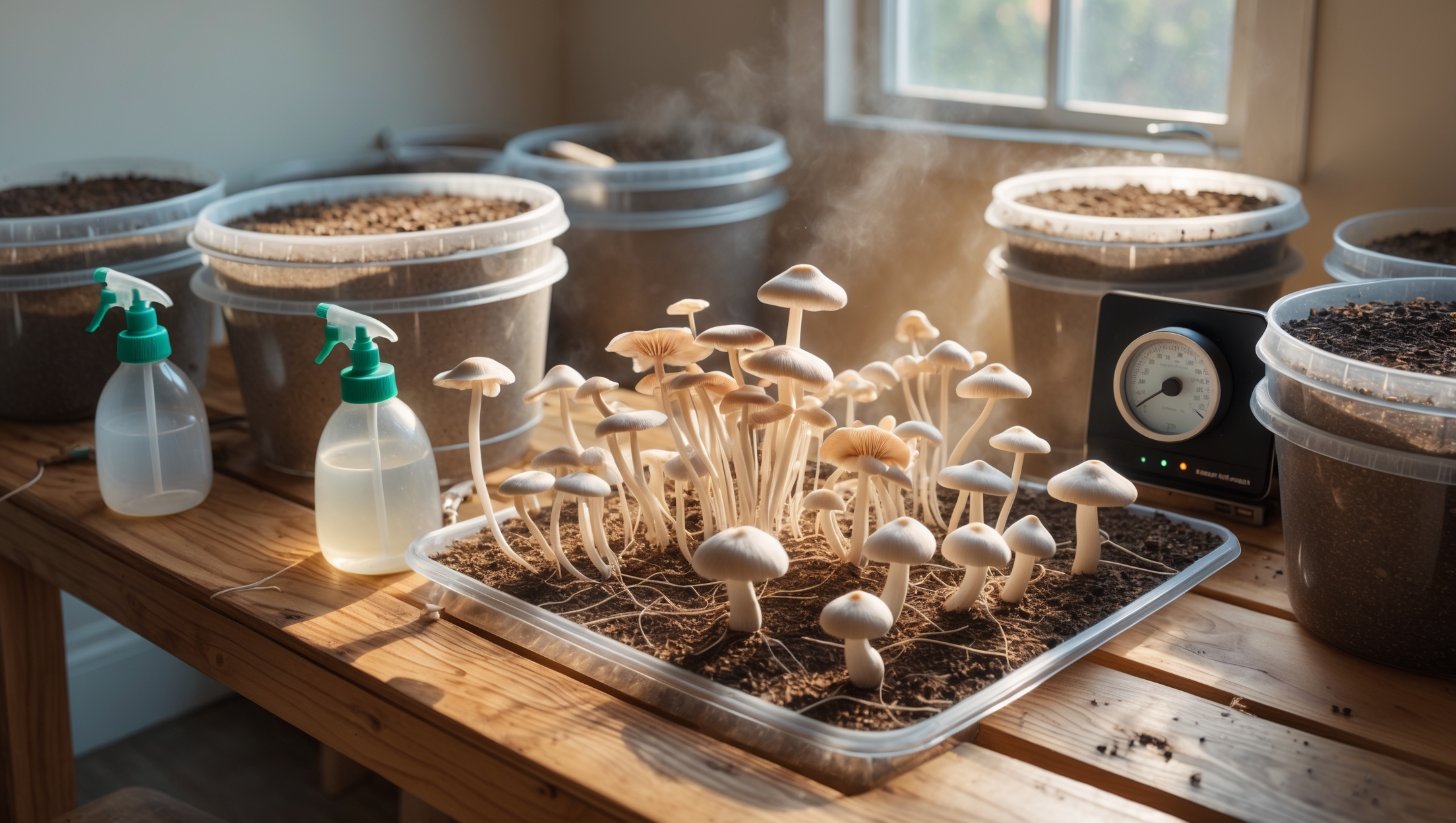
- Humidity Gauge (Hygrometer): For accurate monitoring of humidity levels inside the fruiting chamber.
- Misting Bottle: Essential for manual humidity control, especially in small setups.
- Ultrasonic Humidifier (for larger grows): Maintains consistent humidity in bigger fruiting chambers.
Fruiting Chambers
- Monotub: A modified plastic storage tub with air exchange holes, ideal for beginners and intermediate growers.
- Grow Tent: More advanced option with better control over light, humidity, and airflow.
- Shotgun Fruiting Chamber: DIY option using perlite and drilled holes for passive humidity and airflow.
Airflow and Lighting
- Small Fan: Helps prevent stagnant air and reduces the risk of mold.
- LED Light or Indirect Sunlight: Mushrooms need some light to form correctly—6500K daylight spectrum LEDs work well.
Harvesting and Post-Harvest Tools
Harvesting Tools
- Stainless Steel Knife or Scissors: For cleanly cutting mushrooms at the base.
- Harvesting Basket or Tray: To transport mushrooms without bruising.
Drying and Storage Equipment
- Food Dehydrator: For preserving mushrooms for long-term storage.
- Paper Bags or Ventilated Containers: Prevents excess moisture buildup during short-term storage.
Optional Upgrades for Advanced Growers
Once you gain experience and want to scale up, consider investing in the following:
- Laminar Flow Hood: Creates a sterile workspace for advanced inoculation and cloning.
- Autoclave: For large-scale sterilization, often used by commercial or highly dedicated hobbyists.
- Environmental Controller: Automates humidity, temperature, and lighting schedules.
- pH Meter: Useful for fine-tuning substrate conditions.
Cleaning and Maintenance Supplies
- Bleach Solution: For periodic deep-cleaning of equipment and fruiting chambers.
- Microfiber Cloths: For wiping down surfaces without introducing fibers or contaminants.
- Storage Shelving: Keeps tools organized and reduces clutter in your grow area.
Budgeting for Your Mushroom Cultivation Setup
One of the appeals of home mushroom cultivation is its scalability. You can start with a basic kit and a few simple tools, or gradually invest in advanced equipment as your skills grow. Here’s a breakdown of typical costs:
- Beginner Setup: $50–$150 (monotub, spray bottle, substrate, spawn, gloves, alcohol, thermometer, basic tools)
- Intermediate Setup: $150–$300 (add humidifier, grow tent, shelving, food dehydrator)
- Advanced Setup: $500+ (laminar flow hood, autoclave, environmental controller)
Shop for food-grade and lab-grade tools when possible, as these last longer and are easier to clean. Local garden centers, online retailers, and specialty mushroom supply stores all offer quality options.
Practical Tips for Tool Maintenance and Longevity
- Clean After Every Use: Rinse and disinfect tools after each session to prevent contamination.
- Store in a Dry Area: Moisture encourages mold and rust—keep your equipment dry.
- Replace Consumables: Single-use gloves, masks, and filters should be replaced regularly.
- Inspect Regularly: Check for cracks, rust, or wear that could compromise cleanliness or safety.
Safety Considerations for Home Mushroom Cultivation
- Use Clean Water: Always use potable water for substrate hydration and misting.
- Handle Chemicals Safely: When using bleach or alcohol, ensure good ventilation and wear gloves.
- Label All Containers: Especially if you have children or pets, clearly label all chemicals and substrates.
- Ventilate Your Grow Area: Some mushrooms release spores that may irritate sensitive individuals.
Conclusion: Equipping Yourself for Success in Home Mushroom Cultivation
Growing mushrooms at home is a unique blend of science, art, and patience. While the prospect may seem daunting, the right set of tools and equipment transforms the process from intimidating to manageable—even enjoyable. From the initial substrate preparation to the rewarding moment of harvest, each stage of mushroom cultivation benefits from the use of specialized, clean, and reliable equipment. Investing in quality tools not only boosts your chances of a successful harvest but also minimizes frustration and wasted effort due to contamination or failed batches.
Take time to understand each tool’s purpose and choose what best fits your current scale and ambition. Start small and add more specialized equipment as your confidence and curiosity grow. Remember, cleanliness and precision are your best allies in mushroom cultivation—never skimp on sanitization or the proper care of your gear. With preparation, the right tools, and an eye for detail, you’ll soon enjoy the rich flavors and textures of home-grown mushrooms, straight from your own fruiting chamber to your kitchen table. Happy growing!
If I’m on a tight budget, which of the essential tools for mushroom cultivation would you consider the most important to invest in first and which ones could be improvised at home?
If you’re on a tight budget, prioritize buying high-quality spawn and a basic pressure cooker or large pot for sterilization. Items like spray bottles, humidity tents, and fruiting chambers can often be improvised with clean household containers and plastic bins. Focus on cleanliness and sterilization to ensure successful cultivation.
If I’m just starting out and want to avoid contamination, which cleaning tools or disinfectants do you consider absolutely essential, and are there any household products that work just as well as specialized gear?
For beginners, regular household items like 70% isopropyl alcohol, unscented bleach, and paper towels are highly effective for cleaning surfaces and tools. Spray bottles for these disinfectants and a pack of disposable gloves will help minimize contamination. You don’t need expensive specialized products—consistent cleaning with these basics works very well.
With kids in the house, how can I make sure my mushroom growing area stays clean enough to avoid contamination, especially during the incubation stage?
To keep your mushroom growing area clean, choose a location out of reach of kids and pets, like a closed cabinet or high shelf. Wipe surfaces with disinfectant before setting up, wash your hands before handling materials, and consider using gloves. Regularly check the area for spills or dust, and keep the incubating containers covered to minimize exposure.
You mention the importance of proper humidity and temperature control during incubation and fruiting. Are there any affordable options for monitoring these conditions at home, or is specialized equipment necessary?
You don’t need expensive specialized equipment to monitor humidity and temperature. Affordable digital hygrometer-thermometers are widely available online and at hardware stores. These small devices give accurate readings and are perfect for home mushroom cultivation. Just place one in your grow area to keep tabs on conditions.
You mention the importance of cleanliness and controlling contamination—can you clarify which equipment is most critical for maintaining sterile conditions during the inoculation and incubation stages?
During inoculation and incubation, the most critical equipment for maintaining sterility includes a still air box or laminar flow hood to create a clean workspace, flame or alcohol lamp for sterilizing tools like scalpels or inoculation loops, and disinfectant sprays or wipes to clean surfaces and gloves. Using sterilized jars or bags and wearing gloves and masks also helps prevent contamination.
When preparing the substrate, how precise do the measurements need to be? Is a digital scale absolutely necessary, or are there workable alternatives for someone on a tight budget?
You don’t need to be perfectly precise with substrate measurements for home mushroom cultivation. While a digital scale helps with accuracy, you can use common kitchen measuring cups or even estimate by volume if you’re on a budget. Just try to keep ingredient ratios consistent each time for the best results.
When you mention using a digital scale for measuring substrate components, is there a specific accuracy or weight range I should look for when choosing one for home use?
For home mushroom cultivation, a digital scale that measures in grams with a precision of at least 0.1 grams is ideal. Look for one with a capacity of 1 to 5 kilograms, which covers most substrate recipes while allowing for accurate measurements of smaller additives.
If I only have basic kitchen equipment at home, which essential mushroom cultivation tools do I really need to buy right away, and which ones can I improvise or hold off on as a beginner?
As a beginner, you really need sterile gloves, a spray bottle for misting, and a suitable container or bin for your mushroom substrate. You can improvise with kitchen items for mixing, measuring, and cutting, and hold off on more specialized gear like a pressure cooker or humidity tent until you gain experience.
Once the mushrooms reach the harvesting phase, does the guide recommend any particular tools for harvesting to minimize damage to the substrate and encourage future flushes?
Yes, the guide suggests using a small, sharp knife or scissors for harvesting mushrooms. This helps you cut the stems cleanly at the base without disturbing the substrate too much, which can encourage more flushes and reduce the risk of contamination.
Could you provide more detail on what type of digital scale is best for measuring substrate components accurately? Are there specific brands or capacity ranges that work well for beginners without spending too much?
For home mushroom cultivation, a digital kitchen scale with a capacity of 5 to 10 kilograms and 1-gram accuracy is ideal. Look for brands like Ozeri, Etekcity, or Escali—they’re affordable, reliable, and easy for beginners to use. Make sure the scale has a tare function, which helps when weighing multiple ingredients.
For someone just starting out and on a tight budget, which tools from your list are absolutely necessary for a beginner, and which ones can be added later as I get more experience?
For beginners on a budget, focus on essentials like a pressure cooker (or large pot for some species), a clean workspace, jars or containers, a spray bottle, and a basic thermometer. Items like a dehydrator, laminar flow hood, or specialized humidity controllers can be added later as you gain experience and expand your setup.
I’m interested in starting mushroom cultivation at home but I’m on a tight college budget. Which essential tools from your list would you recommend prioritizing for beginners so I can get started without overspending?
To get started on a tight budget, focus on the basics: a clean spray bottle for misting, a sharp knife or scissors for harvesting, and some basic containers or trays for growing your mushrooms. You can often find items like gloves and measuring spoons at home already. As you learn, you can add more specialized gear later.
Do you have recommendations for affordable but reliable digital scales and mixing equipment for someone just starting out with home mushroom cultivation?
For beginners, look for a digital scale that measures in grams with at least 0.1g precision; brands like Ozeri or American Weigh are budget-friendly and reliable. For mixing, sturdy plastic bowls and a silicone spatula work well. Hand mixers aren’t essential unless you’re preparing large batches.
If I make a mistake with substrate mixing or measuring in the initial phase, how much does that actually affect yields or contamination risk later on? Is there any way to troubleshoot or correct early errors?
Mistakes in substrate mixing or measuring can definitely impact your results—uneven mixing can lead to poor mycelium colonization, and incorrect moisture or nutrient levels may increase contamination risk. If you notice a problem early, you can sometimes remix or adjust moisture content before inoculation. If contamination appears later, removing affected areas or starting over with fresh substrate may be necessary.
You mention the need for cleanliness in mushroom cultivation. Can you recommend specific types of sanitizing equipment or cleaning products that are safe to use around edible mushrooms?
For mushroom cultivation, it’s best to use 70% isopropyl alcohol for sanitizing surfaces and tools, as it evaporates quickly and is safe when used properly. Hydrogen peroxide can also be used for cleaning surfaces. For wiping down larger areas, a diluted bleach solution (1 part bleach to 10 parts water) works well, but ensure all residues are rinsed away before introducing mushrooms. Always allow equipment to dry completely before use.
If I want to start growing mushrooms but keep costs low, what would you consider the bare minimum tools I actually need from your list, especially for keeping things clean and avoiding contamination?
To keep costs low and reduce contamination risk, focus on these basics: a clean spray bottle for misting, rubbing alcohol or disinfectant for cleaning surfaces, disposable gloves, and a simple face mask. Use any clean work table and regular kitchen knives or scissors for handling mushrooms. These essentials will help you start safely and affordably.
If I’m just starting out and want to keep costs low, which pieces of equipment are absolutely essential versus what can wait until I get more advanced with my mushroom growing?
To start growing mushrooms affordably, you’ll need a few essentials: clean containers (like jars or plastic tubs), a pressure cooker or large pot for sterilizing, a spray bottle for humidity, and gloves for cleanliness. Items like flow hoods, specialized lights, and humidity controllers can wait until you’re ready to expand or grow more advanced species.
As a parent with limited free time, which tools from your list would you say are absolutely essential for a beginner starting out with kids at home? I want to avoid unnecessary purchases if possible.
For a beginner growing mushrooms with kids, you really just need a clean container (like a plastic tub), a spray bottle for misting, and a thermometer to monitor temperature. Most other specialized tools can wait until you’re more experienced.
When it comes to the incubation phase you mentioned, what kind of containers work best for maintaining the right humidity and cleanliness? Are there specific container materials you recommend for small-scale setups?
For the incubation phase, plastic storage boxes with tight-fitting lids are a popular choice since they help maintain humidity and are easy to clean. Polypropylene containers are especially good because they can withstand sterilization. Glass jars are also used for small batches. Just make sure any container can be properly sealed and cleaned to prevent contamination.
After harvesting, are there specific tools or cleaning routines I should follow to make sure my equipment stays safe for the next growing cycle?
After harvesting, it’s important to thoroughly clean and sanitize all your tools and growing containers. Wash items with hot, soapy water to remove organic debris, then disinfect with a diluted bleach solution or 70% isopropyl alcohol. Make sure everything dries completely before reuse. This helps prevent mold and contamination in your next mushroom batch.
Do you have any recommendations for budget-friendly digital scales or mixing equipment suitable for someone just starting out with home mushroom cultivation?
For beginners, a basic digital kitchen scale that measures in grams and has a tare function works well and is usually inexpensive. For mixing, plastic or stainless steel mixing bowls are affordable and easy to clean. Start simple, and you can always upgrade equipment as you gain experience.
Once the mycelium has colonized the substrate, how can I tell when it’s the right time to move to the fruiting phase, and does the type of equipment used affect this timing?
You should move to the fruiting phase when the mycelium has fully colonized the substrate—it will look bright white with no patches of uncolonized material. The timing isn’t much affected by equipment type, but proper humidity and airflow tools become more important during fruiting.
I’m curious about the cleanliness aspect—are there specific cleaning tools or products you’ve found most effective for preventing contamination during the inoculation and incubation stages?
For preventing contamination during inoculation and incubation, we’ve found that using isopropyl alcohol (at least 70%) and a good quality spray bottle is very effective for disinfecting surfaces and tools. Clean microfiber cloths or paper towels work well for wiping down workspaces. If you want to be extra cautious, a small handheld HEPA air purifier can help keep the area clean by filtering airborne particles.
For someone starting with just oyster mushrooms, which essential tools from your guide are truly necessary for a first attempt, and which could be added later if I want to grow other varieties or scale up?
For your first try with oyster mushrooms, you’ll mainly need a spray bottle for misting, a clean workspace, gloves, and a container or grow bag. More specialized tools like humidity tents, thermometers, or pressure cookers can be added later if you branch out to other varieties or larger setups.
When you talk about needing a digital scale for measuring substrate ingredients, is there a certain level of accuracy I should look for in a basic kitchen scale, or do I need something more precise for mushroom cultivation?
For home mushroom cultivation, a basic digital kitchen scale that measures in grams and has at least 1-gram accuracy is usually sufficient. You don’t need lab-level precision—just make sure the scale can handle the total weight of your substrate and is accurate enough for consistent measurements.
After harvesting, what’s the best way to clean and store the tools to make sure they last and don’t carry contamination into the next cycle?
After harvesting, wash your tools thoroughly with hot, soapy water to remove debris. Disinfect them using rubbing alcohol or a diluted bleach solution, then let them air dry completely. Store tools in a clean, dry area—preferably in a sealed container or bag—to keep them free from dust and contaminants between cycles.
After reading about the different phases like inoculation and fruiting, I’m wondering roughly how much time each stage takes for common varieties like oyster or shiitake mushrooms using basic home equipment?
For oyster mushrooms, the inoculation and colonization phase typically takes 10 to 14 days, followed by 5 to 7 days for fruiting. Shiitake mushrooms usually take a bit longer—colonization can last 2 to 3 months, and fruiting then takes about 7 to 14 days. These timelines can vary with temperature and equipment.
For someone new to mushroom cultivation, how important is investing in a digital scale versus using more basic kitchen measuring tools during substrate preparation? Does accuracy make a noticeable difference for common varieties like oyster or shiitake mushrooms?
For common varieties like oyster or shiitake mushrooms, accuracy does help, especially with spawn and supplement measurements, but you don’t need a fancy digital scale to start. Basic kitchen tools can work if you measure carefully. As you gain experience or want more consistent results, upgrading to a digital scale is worthwhile.
I’m a bit concerned about contamination. Besides using proper equipment, are there specific cleaning routines or products you suggest to keep everything sterile during the inoculation and incubation stages?
Keeping things sterile is crucial in mushroom cultivation. Before starting, wipe down all surfaces with 70% isopropyl alcohol and wash your hands thoroughly. Clean equipment and containers with hot, soapy water and then sanitize them with alcohol or dilute bleach (1:10 ratio). Consider wearing gloves and a face mask during inoculation, and disinfect your work area before and after each session to minimize contamination risks.
You mention digital scales and other equipment for substrate preparation. Is there a budget-friendly starter set you’d recommend that covers just the basics without a lot of extra gadgets?
For a basic, budget-friendly mushroom cultivation setup, you’ll mainly need a small digital kitchen scale, a large mixing bowl or bucket, measuring cups, and a spray bottle for misting. Most of these items can be found at discount stores or online as affordable kitchen starter sets. Expensive or specialized gadgets aren’t necessary to get started.
For someone totally new to mushroom growing, is it really necessary to invest in a digital scale for measuring substrates, or are there reliable low-cost alternatives that work just as well?
A digital scale is helpful for accuracy, especially when following recipes for substrate mixes, but it’s not strictly necessary for beginners. You can use measuring cups or kitchen scoops as a low-cost alternative—just be consistent with your measurements each time. As you gain experience, you might decide to upgrade to a digital scale for more precise results.
If someone wants to start mushroom cultivation on a limited budget, which essential pieces of equipment would you suggest prioritizing first, and are there any reliable DIY alternatives for common tools?
If you’re starting mushroom cultivation on a budget, prioritize clean containers for growing, a spray bottle for humidity, and a pressure cooker or large pot for sterilizing substrate. Many growers use DIY alternatives like repurposed jars, homemade still air boxes from plastic tubs, or even basic kitchen scales for weighing. These options help keep costs low while still providing good results.
You mention both beginner and advanced equipment setups—could you elaborate on which essential tools a first-time grower could skip or substitute if working with a tight budget, without risking the outcome?
If you’re on a tight budget, you can skip a pressure cooker by using a large pot for boiling substrate, though sterilization won’t be as thorough. Instead of a laminar flow hood, use a still-air box for clean inoculation. Basic items like spray bottles, jars, and gloves are essential, but you can substitute expensive grow tents with a simple plastic tote as a fruiting chamber. These substitutions should still give good results for most beginners.
You mention that cleanliness is really important in mushroom cultivation. Could you explain what specific cleaning tools or sanitizers are best for beginners to use at home?
For home mushroom cultivation, beginners should use simple cleaning tools like lint-free cloths, sponges, and soft brushes to wipe down surfaces. Household disinfectants such as isopropyl alcohol (at least 70%), hydrogen peroxide, or diluted bleach (1:10 ratio with water) work well for sanitizing workspaces and equipment. Be sure to carefully wipe and let surfaces air dry before starting your mushroom project.
You mentioned that cleanliness is crucial in every stage of mushroom cultivation. Can you clarify which specific tools or cleaning methods you’ve found most effective at minimizing contamination risk, especially during the inoculation phase?
During inoculation, I recommend using an alcohol spray bottle to disinfect surfaces, gloves, and your tools like scalpels or inoculation loops. A pressure cooker is essential for sterilizing substrates and jars. Working inside a still air box or a laminar flow hood also significantly reduces contamination. Wipe everything down with 70% isopropyl alcohol before you begin and between each step for best results.
When choosing a digital scale for measuring substrate components, is there an ideal precision level or weight capacity I should look for, especially if I’m planning to start with small experimental batches versus larger grows?
For small experimental batches, a digital scale with at least 0.1-gram precision and a weight capacity of 1–5 kilograms is ideal. If you plan to scale up, consider a second scale with greater capacity (10–20 kilograms) but 1-gram precision is usually sufficient for larger quantities. This way, you can accurately measure both small additives and bulk substrates.
Could you clarify what type of digital scale is recommended for accurate substrate measurement? Would a basic kitchen scale suffice, or do you suggest a more precise scientific model for beginners?
For beginners, a basic digital kitchen scale that measures in grams with at least 1-gram precision is usually sufficient for preparing mushroom substrate. If you plan to work with very small batches or want extra accuracy, a scientific scale with 0.1-gram precision can be helpful but isn’t strictly necessary for most home setups.
You mentioned the importance of cleanliness in mushroom growing. Are there any recommended cleaning tools or sanitizing practices that beginners should prioritize to prevent contamination during the inoculation and incubation stages?
For beginners, it’s important to wipe down all work surfaces with isopropyl alcohol before starting. Use nitrile gloves and a face mask when handling spores or substrate. Regularly sanitize your hands and any tools, like scalpels or mixing spoons, with alcohol. A small spray bottle of alcohol and clean paper towels are handy cleaning essentials. Sterilizing jars or containers in a pressure cooker or boiling water is also recommended before use.
For someone just starting out, is there a minimum set of tools you’d recommend investing in first, or is it worth getting everything mentioned for better results from the beginning?
If you’re just starting out, it’s best to begin with the basics: gloves, a spray bottle, trays or containers, and a clean work surface. As you gain experience, you can slowly add more specialized equipment. There’s no need to buy everything at once unless you’re ready to scale up right away.
How do I know when to adjust humidity and airflow during the fruiting phase, and are there simple tools that make monitoring these conditions easier for small indoor setups?
During the fruiting phase, keep an eye on the mushroom caps and substrate. If they look dry or growth slows, raise humidity. If you see excess moisture or fuzzy stems, increase airflow. Simple digital hygrometers and small fans work well for monitoring and adjusting these conditions in small indoor setups.
Could you elaborate on the differences between the essential tools required for beginners versus those suggested for more advanced home mushroom growers? I’m curious which items are necessary to start and which can be added over time.
For beginners, the essentials include a spray bottle for humidity, gloves, a clean work surface, a pressure cooker or large pot for sterilizing, jars or bags for substrate, and a fruiting chamber. Advanced growers often add things like flow hoods, lab-quality scalpels, precise hygrometers, automated misting systems, and specialized incubation chambers. You can start with basic gear and upgrade to more specialized tools as your skills and needs grow.
If I’m on a tight budget, which essential tool should I prioritize buying first for home mushroom growing—the digital scale for substrate or a humidity monitor for fruiting?
If you have to choose just one, prioritize the humidity monitor. Proper humidity is crucial for mushrooms to fruit successfully, and you can estimate substrate amounts with common kitchen tools if needed. Monitoring humidity will help you avoid disappointing harvests.
For the substrate preparation phase, do you recommend any specific brands or types of digital scales that are accurate but still affordable for beginners?
For beginners, digital kitchen scales that measure in grams and have a tare function are perfect for substrate preparation. Brands like Ozeri, Etekcity, and Greater Goods are reliable, accurate, and usually quite affordable. Look for models with a capacity of at least 5 kilograms to give you flexibility.
Could you elaborate on which cleanliness tools are most effective at minimizing contamination at each stage of cultivation? I’m especially concerned about the inoculation and incubation phases.
For the inoculation phase, using a still air box or flow hood is vital to reduce airborne contaminants. Sterilize surfaces and tools with 70% isopropyl alcohol, and always wear disposable gloves and a face mask. During incubation, maintain cleanliness by wiping down the area regularly, using filtered containers, and minimizing how often you open them. These steps will greatly lower contamination risks during both phases.
I noticed the guide touches on the importance of cleanliness throughout the process. Are there specific cleaning products or practices you recommend for sanitizing equipment to reduce the risk of contamination during inoculation and incubation?
For sanitizing your equipment, isopropyl alcohol (at least 70%) is highly effective and widely used. You can also use a 10% bleach solution for surfaces. Wipe down all tools, work areas, and containers before use. Wash your hands thoroughly and consider wearing gloves and a face mask to further reduce contamination risks during inoculation and incubation.
If I want to start growing mushrooms at home with my kids and don’t have a lot of space, which beginner tools would you recommend are absolutely necessary from the list you mention?
To start growing mushrooms with your kids in a small space, stick to the essentials: a spray bottle for misting, a clean container or grow bag, gloves for handling, and a simple thermometer to monitor temperature. You can skip the advanced equipment for now and focus on these basics.
Could you clarify what level of cleanliness is really necessary at the inoculation stage for home growers? I want to avoid contamination, but I’m wondering if a HEPA filter or laminar flow hood is overkill for smaller setups.
For home mushroom cultivation, maintaining a clean workspace is important, but you don’t usually need a HEPA filter or laminar flow hood for small setups. Thoroughly sanitize your hands, tools, and surfaces, and work quickly to minimize exposure. A still air box is a practical and affordable alternative that offers plenty of protection against contamination for most home growers.
Could you expand on how to maintain cleanliness during the inoculation stage? Are there specific tools or procedures you find most effective for avoiding contamination at home?
During inoculation, maintaining cleanliness is crucial. Start by wiping down all surfaces with 70% isopropyl alcohol. Use a flame-sterilized scalpel or inoculation loop, and always wear disposable gloves and a mask. Work in a still-air box if possible to reduce airborne contaminants. Sanitize your hands often and minimize air movement during the process. These steps greatly lower the risk of contamination at home.
You mentioned the importance of careful attention to cleanliness. What cleaning or sterilization tools do you find most effective for avoiding contamination during inoculation and incubation at home?
For home mushroom cultivation, I recommend using 70% isopropyl alcohol in a spray bottle for wiping down surfaces and gloves. A pressure cooker is excellent for sterilizing substrates and tools. Clean paper towels, flame-sterilized scalpels or needles, and disposable masks also help reduce contamination risk during inoculation and incubation.
How much of an investment should someone expect when assembling all the essential equipment listed, especially for a beginner? Is it possible to start out on a tight budget and still maintain good results?
A beginner can expect to spend anywhere from $50 to $200 on essential equipment, depending on the scale and quality of items chosen. It is definitely possible to start on a tight budget—many growers use basic tools like plastic tubs, spray bottles, and inexpensive humidity gauges. As you gain experience, you can upgrade equipment for even better results.
Can you elaborate on the measuring and mixing equipment for substrate preparation? Is it possible to get started with basic kitchen tools, or do I really need to invest in specialized gear from the beginning?
You can absolutely start with basic kitchen tools like measuring cups, a kitchen scale, and a large mixing bowl for substrate preparation. Specialized gear is helpful for larger batches, but for beginners, household items work well as long as they’re clean and accurate.
Could you explain more about the digital scale you recommend for measuring substrate components? I want to make sure I get something accurate enough for small batches but affordable for a beginner.
For home mushroom cultivation, a digital kitchen scale with at least 0.1-gram precision is ideal for weighing substrate components accurately, especially in small batches. Look for a scale that can handle up to 5 kilograms, has a tare function, and clear digital display. Many affordable models are available online or at kitchen supply stores, and these work well for beginners without a big investment.
When you mention controlling humidity and temperature during incubation and fruiting, do you recommend starting with an automated setup like a small grow tent, or can basic manual methods keep conditions stable enough for a beginner?
Both options can work well for beginners. Starting with manual methods—like misting and fanning by hand, and monitoring with basic hygrometers and thermometers—is budget-friendly and helps you learn the basics. If you want more consistency and convenience, a small automated grow tent can make things easier, but it’s not strictly necessary at first.
You mentioned the importance of cleanliness, but what are some practical tips or equipment recommendations to minimize contamination during the inoculation and incubation steps, especially for beginners?
To minimize contamination, beginners should work in a clean area and wipe down all surfaces with isopropyl alcohol beforehand. Use gloves, a face mask, and sterilize your tools. A still air box or small HEPA filter unit can make inoculation much safer by reducing airborne contaminants during the process.
I noticed substrate preparation sounds pretty important. Are there budget-friendly alternatives to digital scales or mixing tools that still get good results for home growers?
Absolutely, you can use basic kitchen measuring cups and spoons instead of digital scales. For mixing substrate, clean hands or sturdy household items like a large spoon or a plastic storage bin work well. Precision helps, but consistency and cleanliness are even more important for good results.
Once you’ve got inoculation down, how much ongoing attention do the incubation and fruiting phases need equipment-wise? Can most steps be automated, or do you find hands-on monitoring is still necessary for good yields?
While some equipment like automated humidity and temperature controllers can reduce daily tasks during incubation and fruiting, hands-on monitoring is still important. Subtle adjustments and occasional troubleshooting—like checking for contamination or fine-tuning airflow—help ensure healthy, high-yield mushrooms. Automation eases routine care, but personal oversight really makes a difference.
I’m new to all this and curious about the digital scale you mentioned for measuring substrate components. Is there a specific weight range or accuracy I should look for, or will any kitchen scale work for beginners?
For beginners, a standard kitchen scale that measures up to 5 kg (about 11 lbs) with accuracy to the nearest gram is usually sufficient for preparing most mushroom substrates. Make sure it can handle the typical quantities you’ll be mixing, and check that it has a tare function for easier measuring. More precise scales become important only if you start measuring very small ingredients or supplements.
You talk about keeping things clean to avoid contamination during mushroom cultivation. Could you explain what basic cleaning supplies or sanitization methods you recommend for beginners who don’t have access to specialized equipment?
For beginners, regular household cleaning supplies work well. Use isopropyl alcohol (at least 70%) or diluted bleach (about 1 part bleach to 10 parts water) to wipe down surfaces, tools, and your hands before handling materials. Paper towels, clean sponges, and soap are also helpful for general cleaning. Focus on keeping your workspace tidy and disinfected to minimize contamination risks.
You mention that cleanliness is especially important in mushroom cultivation compared to traditional gardening. Could you elaborate on which specific tools or equipment are most effective for maintaining sterile conditions at home, especially for beginners?
To maintain sterile conditions at home, beginners should focus on a few key items: a spray bottle with 70% isopropyl alcohol for cleaning surfaces and tools, disposable gloves, face masks, and a small HEPA air filter or still air box to reduce airborne contaminants. Wipe down your workspace and equipment before each use to help prevent contamination.
For beginners trying to avoid contamination, how necessary is it to invest in specialized equipment like a laminar flow hood versus just using a still air box? Would basic cleanliness be enough for the early steps?
For beginners, a still air box is usually enough to reduce contamination if you are careful about cleanliness and follow good sterile techniques. Laminar flow hoods offer better protection but are a bigger investment. Many hobbyists start with a still air box and basic cleaning, then upgrade later if needed.
I’m new to mushroom growing and was wondering, is there a big difference in results if I use a regular kitchen scale instead of a digital scale for measuring substrate components, or is the digital one really necessary for beginners?
A regular kitchen scale can work for beginners if it measures in small enough increments and is reasonably accurate. However, a digital scale makes it much easier to get precise measurements, which helps ensure consistency in your substrate mix. If you plan to grow mushrooms regularly, investing in a digital scale is worthwhile, but for casual or first-time attempts, your kitchen scale should suffice.
For someone just starting to grow mushrooms at home, which tools would you recommend as absolutely essential versus those that can wait until later? I want to avoid overspending at the beginning.
To get started, focus on essentials like a spray bottle for humidity, a clean workspace, gloves, a sharp knife, and basic containers or tubs. Items like pressure cookers, hygrometers, or advanced sterilization gear are helpful but not needed right away. You can add those as you gain experience.
The article talks about how cleanliness is really important for preventing contamination during mushroom cultivation. Are there any specific cleaning supplies or techniques you recommend for beginners to keep their setup sterile at home?
For beginners, start with isopropyl alcohol (at least 70%) to wipe down surfaces, gloves, and tools before working. A spray bottle with a diluted bleach solution (1:10 ratio) is also helpful for cleaning larger areas. Use a clean lint-free cloth or paper towels. Always wash your hands thoroughly, and consider wearing a mask to reduce airborne contaminants. Taking these simple steps will help keep your mushroom cultivation setup as sterile as possible.
You mentioned using a digital scale for accurate substrate measurements. Are there any budget-friendly options or household alternatives that work well for small batches of mushrooms?
For small batches, a basic kitchen scale that measures in grams is usually sufficient and quite affordable. Many models cost less than $20 and are accurate enough for home mushroom cultivation. If you don’t have a scale, you can use measuring cups as a rough alternative, but keep in mind the accuracy may vary.
For the incubation and fruiting phases, what are some affordable ways to control humidity and temperature at home? I don’t have a dedicated grow room, so I’m curious if there are simple setups that still work well.
You don’t need a dedicated grow room to control humidity and temperature. For incubation, a plastic storage bin with a loose lid can help maintain warmth—placing it in a closet or near a heating pad works well. For fruiting, a simple clear plastic tote (monotub) with holes for airflow, misted regularly, keeps humidity up. Small hygrometers and thermostats are inexpensive tools to monitor conditions. You can also use a small ultrasonic humidifier nearby if your home is especially dry.
If I want to start with just a basic beginner setup, what’s the minimum set of tools I need to get through inoculation and incubation? I’m trying to keep my budget as low as possible at first.
For a simple, budget-friendly start, you’ll need a few basics: a clean workspace, jars or bags for your substrate, a pressure cooker or large pot for sterilization, a syringe or spore print for inoculation, and a container like a plastic tub for incubation. You can get by with common household items for most steps.
If I’m mainly interested in growing oyster mushrooms, do any of the equipment needs differ from what’s listed here, or can I stick with the same basic tools for all mushroom types?
You can use the same basic tools listed in the guide for growing oyster mushrooms, as they are quite adaptable and beginner-friendly. However, for oysters, a simple setup like plastic bags or buckets for substrate and minimal environmental controls often works well, so you might not need more advanced equipment unless you want higher yields or more precise conditions.
The article mentions how important cleanliness is when cultivating mushrooms at home. What specific tools or practices would you suggest for minimizing contamination during the inoculation and incubation phases?
To minimize contamination, use a disinfected workspace, ideally with a still air box or in front of a HEPA filter. Clean all tools with isopropyl alcohol, wear gloves, and sanitize your hands frequently. Flame-sterilize needles or scalpels before use. Wipe down jars and lids before inoculation and keep everything covered as much as possible during both inoculation and incubation.
When preparing the substrate, is there a specific type of container or mixing bowl that works best to avoid contamination during the process? Or can I just use something from my kitchen?
For substrate preparation, it’s best to use a container or mixing bowl made of stainless steel or food-grade plastic, as these are easy to clean and sanitize. While you can use something from your kitchen, make sure it is thoroughly cleaned and disinfected beforehand to minimize contamination risk. Avoid containers with scratches or cracks, as these can harbor contaminants.
How much of a difference does using a digital scale make versus just estimating substrate measurements by eye or with regular measuring cups? Is the accuracy really that critical for beginners?
Using a digital scale helps ensure your substrate ratios are accurate, which can lead to better and more consistent mushroom yields. For beginners, eyeballing or using cups is okay for small batches, but a scale reduces mistakes that can affect moisture levels or nutrient balance. It’s not absolutely critical at first, but accuracy does help you learn and troubleshoot more effectively.
Could you clarify what level of cleanliness is recommended when preparing substrates at home, and are there specific types of sanitizing equipment that are particularly effective for beginners to prevent contamination?
For home mushroom cultivation, aim for a clean but not necessarily sterile environment when preparing substrates. Washing hands, wiping down surfaces, and using clean containers is usually sufficient. For beginners, a basic spray bottle with a 70% isopropyl alcohol solution works well for sanitizing tools and surfaces. Pressure cookers are also highly effective for sterilizing substrates if you want extra protection against contamination.
After the fruiting stage, are there recommendations for what to do with the leftover substrate or tools for cleaning up the growing space to prep for another round?
After harvesting, the spent substrate can often be composted or added to your garden as a soil amendment, since it still contains nutrients. For cleanup, use a mild bleach or hydrogen peroxide solution to thoroughly clean all surfaces and tools before starting a new batch. Make sure everything is completely dry before reusing to discourage mold growth.
Could you give some examples of how to control humidity and temperature during incubation and fruiting phases without buying expensive equipment? Are there any good DIY methods for people on a budget?
Absolutely, you can control humidity by using a simple spray bottle to mist the inside of your fruiting chamber or by placing a shallow tray of water inside the growing area to increase moisture. For temperature, placing your setup in a well-insulated spot or near a gentle heat source like a heating pad on low (with a towel for safety) can help. Insulated boxes and homemade fruiting tents from plastic tubs often work well for budget growers.
When preparing substrates for home mushroom cultivation, do you recommend using a certain type of digital scale for more accuracy, or will any basic kitchen scale suffice for beginners?
For beginners, a basic kitchen scale is usually accurate enough for measuring substrates and supplements. Just make sure it can measure in grams and handles the quantities you plan to use. If you start working with larger batches or need very precise ratios, then investing in a digital scale with 0.1-gram accuracy could be helpful.
Once the mushrooms reach the fruiting stage, how do you monitor and control humidity and airflow effectively? Are there any low-tech solutions or is electronic equipment a must-have?
You can manage humidity and airflow during the fruiting stage with or without electronic equipment. For a low-tech approach, mist your fruiting chamber regularly and fan it a few times a day to boost airflow. Simple hygrometers and manual misting bottles work well. Electronic humidifiers and fans offer more control but aren’t strictly necessary for small-scale grows.
Does the digital scale need to be a specific type for measuring substrate ingredients, or will any basic kitchen scale do the job for home cultivators?
For most home mushroom cultivation, a basic kitchen scale is perfectly adequate for measuring substrate ingredients. Just make sure your scale can measure in grams for better accuracy, and that it has a capacity suitable for the quantities you plan to use. No specialized digital scale is necessary.
When it comes to measuring and mixing substrate, are there affordable tools that still give accurate results, or is it worth investing in more expensive equipment from the start?
You don’t have to spend a lot to get accurate results when measuring and mixing substrate. Basic digital kitchen scales, inexpensive measuring cups, and sturdy mixing containers work well for most home growers. Once you gain experience and scale up your operation, you might consider investing in more specialized or larger equipment, but starting with affordable tools is perfectly fine.
You mention that cleanliness is crucial in mushroom cultivation to prevent contamination. Could you give some practical tips or equipment suggestions for maintaining a sterile environment during the inoculation phase at home?
To help maintain a sterile environment during inoculation, wear disposable gloves and a face mask, and sanitize your work surface with rubbing alcohol. Use a flame-sterilized scalpel or needle when handling spores or substrate. Working inside a still air box can greatly reduce airborne contaminants for home setups.
Could you suggest budget-friendly alternatives for some of the essential tools mentioned for substrate preparation? I’m trying to minimize upfront costs as I experiment with my first batch.
You can use common household items as substitutes for many substrate preparation tools. For example, a large pot and stove can replace a pressure cooker for pasteurizing small batches. Clean food-grade plastic containers work well instead of specialized tubs. For mixing, any sturdy spoon or your gloved hands will do. These swaps can help you keep costs low as you get started.
I have a pretty tight schedule as a parent, so are there any essential equipment pieces that help automate humidity or temperature control during the incubation and fruiting stages?
Yes, there are helpful tools for automation. For humidity, a small ultrasonic humidifier with a built-in hygrometer can maintain consistent levels. For temperature, a thermostat-controlled heating mat or a small incubator helps regulate warmth. Many models have timers or can be set to specific ranges, which reduces the need for constant monitoring.
When you mention using a digital scale for measuring substrate components, are there any affordable but reliable brands that work well for small DIY projects at home?
For small DIY mushroom cultivation projects, affordable and reliable digital scale brands include Ozeri, Etekcity, and GreaterGoods. These brands offer kitchen scales with good accuracy, often measuring in grams and ounces, and are easy to find online or in stores. Look for a model that supports at least 5 kg capacity for most home substrate recipes.
When starting out as a beginner, which tools from your list are absolutely necessary versus those that are more for advanced setups? I’m trying to prioritize what to buy first without overspending.
As a beginner, the essentials you should get are a pressure cooker or large pot for sterilizing, jars or containers, a spray bottle for misting, and gloves for cleanliness. More advanced equipment like flow hoods, automated humidifiers, or incubators can be added later as you gain experience. Start simple to keep costs down and upgrade as you go.
When it comes to measuring and mixing substrate, is it better to invest in a digital scale right away, or are there other budget-friendly options that still work well for beginners?
A digital scale is ideal for accuracy, especially as you refine your technique, but many beginners start with simple measuring cups or inexpensive kitchen scales. These can work well for small batches. As consistency becomes more important, you might consider upgrading to a digital scale.
Could you elaborate on how to maintain proper cleanliness during the different stages, especially inoculation? Are there affordable alternatives to a flow hood or is it worth investing in one from the start?
Maintaining cleanliness is key, especially during inoculation. Use a disinfected workspace, wipe surfaces with alcohol, and always wear gloves and a mask. While a flow hood offers the best protection, many home growers use a still air box as a budget-friendly alternative. It’s essentially a clear plastic box with armholes, which helps minimize contamination. If you plan to grow mushrooms regularly or at a larger scale, investing in a flow hood can make the process easier and more reliable.
When preparing the substrate, do I need a separate mixing container just for mushroom growing, or is it safe to reuse something from my regular kitchen as long as I clean it well first?
You can safely reuse a kitchen container to mix your mushroom substrate, provided you clean it thoroughly before and after use. Just make sure there are no soap or food residues left, as these can affect your mushrooms. Many growers use regular kitchenware without issue as long as hygiene is maintained.
How much time should I set aside for each phase, especially for incubation and fruiting, if I’m just starting out with home mushroom cultivation?
For beginners, the incubation phase usually takes about 2 to 4 weeks, depending on the mushroom species and conditions. Fruiting typically lasts 1 to 2 weeks. Be sure to check your setup daily during fruiting for humidity and growth. Planning for at least a month in total is a good estimate.
Is it possible to substitute household items for some of the substrate mixing and measuring equipment, or do I need to invest in specialized tools right away to see decent results?
You can definitely use common household items like mixing bowls, large spoons, and kitchen scales for substrate preparation when starting out. As long as your tools are clean and allow for accurate measuring and thorough mixing, you should get good results without needing to buy specialized equipment immediately.
Can you recommend a low-maintenance setup for parents who want to try growing mushrooms at home but don’t have much spare time? I’m especially interested in what equipment really makes a difference for beginners.
For a low-maintenance approach, mushroom grow kits are the easiest option—they come pre-inoculated and just need misting. If you want to assemble your own setup, choose a plastic tote as a fruiting chamber, a spray bottle for humidity, and a digital hygrometer to monitor conditions. Skip complex tools or substrates and stick to beginner-friendly varieties like oyster mushrooms for the best results.
The article mentions that cleanliness is crucial for preventing contamination, especially during inoculation. Are there any specific cleaning products or sanitation tools you’d recommend for a beginner on a budget?
For beginners on a budget, regular household items work well. Isopropyl alcohol (at least 70%) is excellent for wiping surfaces and tools. Basic hand soap and hot water are effective for cleaning your hands and workspace. Paper towels or clean cloths can be used for drying. If you’re looking to sterilize jars or equipment, a basic pressure cooker or even boiling water can help.
You mentioned the importance of controlling humidity and temperature during incubation and fruiting. Are there affordable tools or gadgets you recommend for small-scale growers to keep those conditions stable at home?
For small-scale mushroom growing at home, digital hygrometers and thermometers are inexpensive tools to monitor humidity and temperature. To control humidity, many growers use simple spray bottles or affordable ultrasonic humidifiers. A small heat mat can help maintain steady warmth if your space is cool. These items are widely available and don’t require a big investment.
You mention the importance of temperature and humidity control during incubation and fruiting. What are some reliable, entry-level devices or setups for monitoring and maintaining these conditions at home?
For beginners, a digital hygrometer-thermometer combo is a simple way to monitor temperature and humidity. For maintaining conditions, a small ultrasonic humidifier and a thermostat-controlled space heater or seedling heat mat work well. Automated plug-in controllers can help keep levels steady without constant checking.
If I’m mainly interested in growing oyster mushrooms, are there any tools you would consider optional from the essential list, or do they all remain necessary regardless of the mushroom type?
For oyster mushrooms, some tools like a pressure cooker or laminar flow hood can be considered optional, especially if you use pre-sterilized substrates or grow kits. However, basics like a spray bottle, gloves, and a clean workspace are still important for any mushroom type.
I’m curious about the cleanliness part. For a family with young kids and pets running around, what are some realistic ways to keep things sanitary during the mushroom inoculation stage?
To keep things sanitary during inoculation, choose a low-traffic area where you can close the door, like a bathroom or laundry room. Wipe down surfaces with alcohol or a bleach solution beforehand. Wash your hands thoroughly, and consider wearing gloves and a mask. Try to schedule inoculation when kids and pets are occupied elsewhere to minimize disruptions.
Once I have my substrate mixed and inoculated, how long does it usually take before I see any mushrooms start to grow? I’m trying to set my expectations for the whole process.
After mixing and inoculating your substrate, it usually takes about 2 to 4 weeks for the mycelium to fully colonize, depending on the mushroom species and conditions. Once colonization is complete and you begin fruiting conditions, you can expect to see mushroom pins within 1 to 2 weeks. So, from inoculation to seeing baby mushrooms, it generally takes around 3 to 6 weeks.
Once I have my tools and substrate ready, how do I know when it’s time to move from the incubation phase to fruiting, and are there specific indicators or tools that can help monitor this transition?
You’ll know it’s time to move from incubation to fruiting when the substrate is fully colonized, meaning it looks consistently covered in dense white mycelium. This usually takes a couple of weeks depending on species and conditions. Some growers use clear containers to easily see colonization. Hygrometers and thermometers can also help track conditions to ensure the transition is done at the right time.
If I only want to cultivate oyster mushrooms at home, are there any essential tools listed here that I could skip, or is every item necessary no matter which mushroom type I grow?
If you’re focusing just on oyster mushrooms, you can skip some tools like the pressure cooker, since oysters are less prone to contamination and can be grown using simpler methods. Basic items like a spray bottle, growing containers, and gloves are still essential, but you may not need specialized tools like a laminar flow hood.
For the incubation stage, is a basic household thermometer sufficient to monitor temperature, or would investing in a specialized device make a noticeable difference in results?
A basic household thermometer can work if you just need a general idea of temperature, but a specialized device, like a digital thermometer with a probe, gives more accurate and consistent readings. For best results during incubation, especially if you’re aiming for reliable yields, investing in a more precise thermometer is worthwhile.
You mention that cleanliness is critical during home mushroom cultivation to avoid contamination. Could you elaborate on what kind of cleaning tools or disinfectants are best for maintaining a sterile environment at each stage?
For home mushroom cultivation, it’s best to use isopropyl alcohol (70%) or hydrogen peroxide as disinfectants for surfaces, tools, and hands. Clean all equipment like trays, containers, and gloves with hot soapy water before disinfecting. Paper towels or lint-free cloths work well for wiping down surfaces. A small spray bottle filled with alcohol or peroxide is handy for quick sanitation during each step, especially before inoculation and handling substrates.
You mentioned the importance of cleanliness and controlling humidity during mushroom cultivation. Are there particular brands or models of humidity controllers or sterilization tools that you find especially reliable for beginners?
For beginners, Inkbird humidity controllers are popular for their reliability and ease of use. For sterilization, many hobbyists trust Presto or All American pressure cookers for sterilizing substrate and tools. These brands are well-reviewed and common in home mushroom cultivation.
When it comes to maintaining proper humidity during the fruiting stage, do you recommend starting with a basic spray bottle or is it worth investing in an automated humidifier right away for small indoor setups?
For small indoor setups, a basic spray bottle works well and gives you control as you learn how much moisture your mushrooms need. If you plan to grow larger batches or want to save time, an automated humidifier can be a worthwhile upgrade later on.
Could you clarify how crucial a digital scale is during substrate preparation? If I only have basic kitchen measuring tools, would that impact the quality or yield of my home-grown mushrooms?
A digital scale is especially useful during substrate preparation because accurate measurements of ingredients like grain, supplements, and water help create the ideal environment for mushroom growth. Using basic kitchen measuring tools can work, but it may lead to inconsistent substrate mixtures, which could affect both the yield and quality of your mushrooms. If possible, try to measure as precisely as you can, even with basic tools.
Once the mushrooms reach the fruiting stage, how important is it to invest in specialized humidity or airflow equipment versus using a DIY solution like a modified tote or manual misting?
For many home growers, a DIY setup like a modified tote with manual misting and fanning can be very effective for small-scale cultivation, especially if you’re attentive. Specialized humidity and airflow equipment offer more consistent conditions and convenience, which is useful for larger or frequent grows. It depends on your scale, budget, and how hands-on you want to be.
Could you go into more detail about what kind of humidity and temperature controls are the most important during the incubation versus fruiting stages? I’m not really sure how precise I need to be or what equipment is best for beginners.
During incubation, mushrooms prefer stable temperatures (usually 70–75°F) and high humidity (around 70%). This stage doesn’t require much light. For fruiting, humidity should be higher (85–95%) and temperatures slightly lower (60–68°F), plus indirect light. Beginners often use a simple digital hygrometer/thermometer combo and a spray bottle for humidity. A plastic storage box with a loose-fitting lid works well to maintain conditions. For more precision, you can add a small humidifier and a thermostat-controlled heat mat if needed.
Once the mushrooms reach the fruiting stage, how much time each day should I set aside to monitor things like humidity and airflow? I need to plan this into my daily routine.
During the fruiting stage, you’ll want to check on your mushrooms at least twice a day. Spend 5–10 minutes each time to monitor humidity, airflow, and general conditions. This daily routine helps catch any issues early and keeps your mushrooms healthy.
When preparing the substrate, you mention using a digital scale for accurate measurements. Could you give a few examples of common substrate mixes and how precise the measurements really need to be for beginners?
For common substrate mixes like coco coir and vermiculite (often 1:1 by volume) or straw and coffee grounds, close approximations are usually fine for beginners. A digital scale helps when recipes call for specific ratios, such as 650g coir to 250g vermiculite. Being within 5–10% of the recommended amounts is generally acceptable, so you don’t have to be perfectly exact when starting out.
How much hands-on time should I expect to spend managing humidity, temperature, and substrate mixing in these different stages if I’m setting up a small mushroom grow at home?
For a small home setup, you can expect to spend about 10–15 minutes daily checking and adjusting humidity and temperature, especially during fruiting. Mixing substrate is usually a one-time task per batch and may take 30–45 minutes. Most of your time will be early on during setup, with daily maintenance being quite minimal.
I’m interested in trying home mushroom cultivation, but I don’t have a ton of extra time or space. Are there any shortcuts or minimal equipment setups you recommend for a busy parent, or is it necessary to have all these specialized tools right from the start?
You don’t need all the specialized tools to get started. For busy parents with limited space, a simple mushroom grow kit is a great shortcut. These kits usually include everything you need and require very little setup or maintenance, making them perfect for beginners.
If I’m just getting started with home mushroom cultivation and don’t want to invest a lot up front, which of the tools listed are truly necessary, and which can I improvise with basic kitchen items?
To start growing mushrooms at home with minimal investment, you’ll need a clean container, a spray bottle for misting, and a sharp knife or scissors for harvesting. These can all be basic kitchen items. While items like a humidity tent or grow lights are helpful, you can often improvise with plastic bags and a well-lit room. Focus on cleanliness and moisture control, and upgrade tools as your interest grows.
Could you clarify how important it is to use a digital scale versus measuring by volume when preparing substrate for home mushroom cultivation? Is accuracy really that critical for beginners?
Using a digital scale is more accurate than measuring by volume, especially for ingredients like supplements or hydrated lime, which can vary in density. For beginners, small inaccuracies usually aren’t disastrous, but weighing ingredients helps ensure consistent results and fewer problems as you learn. If you want reliable yields, a digital scale is a worthwhile investment.
You mentioned the risk of contamination during the different growth phases. Are there any beginner-friendly ways to maintain cleanliness without needing expensive lab gear?
Absolutely! Simple practices can help prevent contamination. Use soap and water to clean your hands and all surfaces before working. Wipe tools and containers with rubbing alcohol. Work in a draft-free space, and cover your work area with freshly washed towels. These steps go a long way without fancy equipment.
If I’m just starting out with a small oyster mushroom kit, do I still need a digital scale and advanced measuring tools, or are there any simpler alternatives for beginners on a budget?
For a small oyster mushroom kit, you don’t need a digital scale or advanced measuring tools. Most beginner kits only require basic items like a clean spray bottle for misting and maybe a kitchen spoon or cup for measuring water. Save the specialized equipment for when you move on to larger or more complex grows.
When picking out a digital scale for measuring substrate components, is there a certain weight range or level of accuracy you recommend for beginners who only want to grow a small batch of mushrooms?
For small batch mushroom growing, a digital scale with a capacity of 2 to 5 kilograms and accuracy to at least 1 gram is ideal. This range lets you measure both small additives and larger substrate amounts accurately, making the process straightforward for beginners.
Do you have any tips for keeping things clean during the inoculation stage? I’m worried about contamination but not sure which cleaning tools or products are most effective at home.
For home mushroom cultivation, keeping things clean during inoculation is key. Wipe down all surfaces with 70% isopropyl alcohol and use a disinfectant spray on your workspace. Wash your hands thoroughly, wear disposable gloves, and flame sterilize any metal tools. Using a still air box or working in a draft-free area can also help prevent contamination.
You mentioned how important cleanliness is in mushroom cultivation. Can you give some tips or recommendations for cleaning and maintaining the equipment between cycles, especially if I don’t have a dedicated space for growing?
Absolutely! Between growing cycles, wash all tools and surfaces with hot, soapy water, then wipe them down with isopropyl alcohol or a bleach solution. Let equipment fully air dry before reusing. Work on a clean table, and consider using disposable gloves and masks to limit contamination, even if you don’t have a dedicated grow area.
After inoculation, what’s a realistic timeframe before moving to the incubation stage, and what tools from your list make monitoring this transition easiest for beginners?
After inoculation, you can typically move to the incubation stage immediately, as the inoculated substrate should be kept in incubation conditions right away. For beginners, a digital thermometer and hygrometer are especially useful from the tools list. These help you track temperature and humidity, which are crucial for successful incubation and colonization.
Do you have suggestions for budget-friendly measuring equipment? I’d like to start with oyster mushrooms, but I don’t want to overspend if I’m only doing small batches as a beginner.
For small batches of oyster mushrooms, a basic digital kitchen scale is perfect and quite affordable—look for one with 0.1-gram accuracy. A set of inexpensive measuring spoons and cups will also do the job for measuring dry or liquid ingredients. These tools are widely available at discount or grocery stores, so you don’t need to invest in specialized equipment right away.
Once mushrooms reach the fruiting stage, what are some indicators that it’s time to harvest, and do you recommend any specific harvesting tools to minimize damage to the mushrooms or the mycelium?
Mushrooms are typically ready to harvest when the caps have fully opened but before the edges start to curl upward or release spores. Look for firm, well-shaped caps. To minimize damage, use a clean, sharp knife or small pair of scissors to cut the stem at the base rather than pulling, which helps protect the mycelium for future flushes.
For someone just starting out and looking to keep costs low, which of the essential tools listed would you consider truly non-negotiable versus ones that could be added later as I get more experience?
If you’re just starting out and want to minimize expenses, the truly non-negotiable tools are a clean spray bottle for misting, containers or trays for growing, and a sharp knife or scissors for harvesting. You can add items like humidity tents, temperature monitors, and fancy sterilization tools later as you gain experience and scale up.
You mention digital scales for measuring substrates—do I really need a specialized one, or will a standard kitchen scale work for a beginner growing a small batch?
A standard kitchen scale works perfectly fine for beginner mushroom growers handling small batches. It should be accurate enough to measure out substrate ingredients. Save specialized digital scales for when you’re working with larger volumes or need more precise measurements.
Could you explain a bit more about how to keep things clean during inoculation? I’m worried about contamination and not really sure what supplies I need to prevent it at home.
To prevent contamination during inoculation, focus on cleanliness and minimizing airflow. Use a clean workspace, wipe down surfaces with 70% isopropyl alcohol, and wash your hands well. Wear gloves and a mask. A still air box or glove box can really help block contaminants. Also, flame-sterilize your needle or scalpel before each use. These steps will greatly reduce the risk of contamination.
For someone just starting with home mushroom cultivation on a budget, which pieces of equipment can I safely improvise or skip, and which ones are truly essential right from the start?
If you’re just starting out, the essentials you shouldn’t skip are a clean workspace, jars or containers for growing, and a reliable spray bottle for humidity. You can often improvise with items like plastic storage boxes for fruiting chambers and reuse kitchen tools for mixing substrate. More advanced equipment like pressure cookers and specialized humidity controllers can wait until you’re ready to scale up.
You talk about different equipment for each phase, but how often do tools like digital scales or mixing containers need to be replaced or upgraded as my setup grows? Are they usually long-term investments?
Digital scales and mixing containers are generally long-term investments, especially if you choose good quality items from the start. They don’t usually need frequent replacement unless they get damaged or your batch sizes outgrow their capacity. As your setup grows, you might upgrade to larger or more precise versions, but the originals can still be useful for smaller tasks.
When it comes to managing humidity and temperature during the incubation and fruiting stages, do you recommend any particular brands or types of meters or control devices that are both reliable and user-friendly for home growers?
For home mushroom cultivation, digital hygrometers and thermometers from brands like ThermoPro or Govee are popular for their accuracy and ease of use. For automated control, Inkbird controllers are reliable and user-friendly, allowing you to set specific humidity and temperature ranges for both incubation and fruiting stages.
You mention that cleanliness is crucial during the various stages. What kinds of tools or cleaning products do you recommend to minimize contamination risk, especially during inoculation and incubation?
To minimize contamination risk, use isopropyl alcohol (70%) or hydrogen peroxide to disinfect surfaces and tools. Sterile gloves, face masks, and a spray bottle for sanitizing your workspace are helpful. Flame-sterilize needles or scalpels and use disposable alcohol wipes on jars and lids, especially during inoculation and incubation stages.
For someone just starting out with mushroom cultivation on a limited budget, which of the essential tools you listed can be improvised with common household items, and which ones really require investing in specialized equipment from the beginning?
If you’re starting on a budget, you can improvise with household items for many basics: use glass jars or Tupperware for containers, a regular cooking pot for sterilizing, and a kitchen spray bottle for misting. However, a good quality pressure cooker is worth investing in for reliable sterilization, and a proper fruiting chamber can help with humidity control. Most other items can be substituted until you’re ready to upgrade.
If I’m just doing a small batch of oyster mushrooms, can I skip some of the equipment listed for substrate mixing, or is it really necessary to have everything from the start to avoid contamination?
For a small batch of oyster mushrooms, you can simplify your setup and skip some of the specialized substrate mixing equipment. Just make sure to use clean containers and utensils, and be careful with sanitation to minimize contamination risks. Attention to cleanliness is more important than having every single tool.
The article mentions that cleanliness is key to avoiding contamination. Could you share some practical tips or specific cleaning tools you’ve found essential for keeping your workspace sterile throughout the mushroom cultivation process?
Maintaining a sterile workspace is crucial for successful mushroom cultivation. Use isopropyl alcohol (70%) or bleach solutions to wipe down all surfaces before and after each session. Disposable gloves and face masks help minimize contamination from your hands or breath. A spray bottle for disinfectant, lint-free paper towels, and a dedicated brush for equipment are especially handy. Regularly cleaning your tools and working in a draft-free area also helps keep contaminants at bay.
I’m interested in beginner setups—are there any recommendations for essential tools that can be sourced on a tight budget but still help avoid major setbacks during the early phases of mushroom cultivation?
For beginners on a budget, the essentials are a spray bottle for misting, a clear plastic storage bin to use as a fruiting chamber, a basic humidity gauge, and latex gloves. You can also use household items like rubbing alcohol for sterilization and simple measuring cups. These will help maintain cleanliness and proper humidity without a big investment.
How do you recommend maintaining proper humidity during the fruiting phase without investing in expensive equipment? Any DIY hacks for controlling moisture if you’re on a student budget?
You can maintain good humidity by misting the fruiting area with a spray bottle several times a day and covering the setup with a clear plastic bag or plastic tote with small holes for airflow. Placing a shallow tray of water inside the fruiting chamber also helps add moisture. Just be sure to monitor regularly to prevent excess condensation or mold.
Do you have any budget-friendly recommendations for measuring and mixing substrate if I don’t have access to a digital scale or other specialized tools yet?
You can use simple kitchen items as substitutes. For measuring, use standard measuring cups or spoons—just keep your ratios consistent. For mixing substrate, a clean plastic storage bin or large bowl and a sturdy spoon or gloved hands work well. This approach is quite effective for small batches and keeps your setup affordable.
Is it possible to reuse any of the tools or equipment from traditional gardening for mushroom cultivation, or do I need to buy all new gear specifically designed for mushrooms?
You can definitely reuse some traditional gardening tools for mushroom cultivation, such as spray bottles, measuring cups, and gloves, as long as they’re thoroughly cleaned and sterilized. However, items like pressure cookers, specific mushroom substrates, or humidity tents might be needed if you want better results or plan to grow mushrooms regularly.
For someone on a tight budget, are there any essential tools in your list that can be improvised at home or swapped out for everyday household items without compromising the success of growing mushrooms?
Absolutely, you can use several household items to get started. For example, instead of buying a dedicated spray bottle, any clean spray bottle will work. Instead of a humidity tent, you can use a clear plastic storage container. Measuring tools like kitchen scales and spoons are also fine for weighing and mixing. Just ensure everything is clean to avoid contamination.
I’m new to mushroom growing, and I’m worried about keeping everything clean to avoid contamination. Do you have any tips on essential cleaning tools or routines to help maintain a sterile environment at home?
Maintaining cleanliness is crucial for successful mushroom cultivation. Use isopropyl alcohol or bleach solution to wipe down surfaces and tools before and after each session. Gloves, disposable masks, and a dedicated set of clean clothes can help reduce contamination. A small handheld HEPA filter or still air box is also helpful for creating a cleaner workspace.
When you talk about substrate preparation, do you have recommendations for budget-friendly digital scales that are still precise enough for beginners? I’m wondering how critical the accuracy is if I’m just starting out with oyster mushrooms at home.
For oyster mushrooms, accuracy within 1 gram is usually sufficient when measuring ingredients for substrate preparation. Many affordable kitchen digital scales under $20 work well for beginners. Brands like Ozeri and Etekcity are popular and reliable. As long as your scale measures in grams and has a tare function, it should meet your needs for home cultivation.
You mention the need for a digital scale for measuring substrate ingredients. Are there any brands or features you’ve found especially useful, or is any basic kitchen scale sufficient for accuracy in home mushroom grows?
A basic kitchen digital scale is usually sufficient for home mushroom cultivation, as long as it can measure in grams and has a capacity of at least 2–5 kilograms. Look for a scale with a tare function and clear digital readout. Popular brands like Ozeri, Etekcity, or Escali are reliable, but the most important thing is consistent and accurate measurements within a few grams.
You mention that cleanliness is a huge factor in avoiding contamination—do you have specific recommendations for disinfectants or cleaning tools that work best for preparing a home mushroom growing space?
For preparing your mushroom growing space, common disinfectants like isopropyl alcohol (at least 70%), hydrogen peroxide, or a diluted bleach solution work very well. Use spray bottles and clean cloths or paper towels to wipe down all surfaces. Pay special attention to your hands, tools, and containers before handling spawn or substrate. Keeping your workspace tidy and clutter-free also helps minimize contamination risks.
In the section about essential tools for substrate preparation, you mention the need for a digital scale for accurate measurements. Are there specific scale features or brands you would recommend for beginners to ensure consistency without breaking the bank?
For beginners, look for a digital kitchen scale with a capacity of at least 5 kilograms and accuracy to the nearest gram. Features like a clear LCD screen, tare function, and easy-to-clean surface are helpful. Popular, affordable brands include Ozeri, Etekcity, and GreaterGoods. These offer reliability and consistency without a high price tag.
Once you’ve harvested the mushrooms, do any of these tools need special cleaning or maintenance to make sure they’re ready for the next batch? Or can most items just be rinsed and reused right away?
Many tools like scissors, knives, and trays should be washed thoroughly and, if possible, sanitized before reuse to prevent contamination. Brushes and containers can usually be rinsed, but anything that comes into close contact with the substrate or mushrooms benefits from deeper cleaning with hot soapy water or a mild disinfectant. Keeping your equipment clean helps ensure healthy future harvests.
For substrate preparation, do you see a big difference in results between using a digital scale versus just measuring by volume if someone is trying to keep costs low?
Using a digital scale gives you more consistent and accurate substrate ratios, which can lead to better mushroom yields. However, if you’re on a tight budget, measuring by volume can still work, especially for less finicky species. Just try to be as consistent as possible with your measurements to maintain good results.
You mentioned the importance of cleanliness during inoculation to prevent contamination. Can you recommend some practical ways or specific equipment to maintain sterile conditions at home?
To maintain sterile conditions during inoculation at home, consider using a still air box or a small HEPA filter unit to reduce airborne contaminants. Always disinfect surfaces and tools with isopropyl alcohol, wear disposable gloves, and use a face mask. Sterilize your needles or scalpels with a flame or alcohol before use.
After the fruiting stage and harvesting, what’s the best way to clean and maintain the tools to avoid contamination for the next batch? Are there recommended cleaning methods or products that work well for mushroom equipment?
After harvesting, it’s important to clean all your tools with warm, soapy water to remove debris. For extra protection, wipe metal and plastic surfaces with 70% isopropyl alcohol or a diluted bleach solution. Let everything dry completely before storing. Regular cleaning and sanitizing reduce contamination risk for your next mushroom batch.
How time-consuming is substrate preparation with the essential tools you listed? I’m completely new to this and wondering what kind of time commitment I should expect each week.
Substrate preparation with the essential tools typically takes about 1 to 2 hours, mostly during the initial setup. After that, weekly maintenance is minimal—mainly checking moisture and cleanliness, which usually takes 15–30 minutes per week. The tools streamline the process, making it manageable for beginners.
For someone just starting out with home mushroom growing, do you recommend any specific brands or models for digital scales and mixing equipment, or will basic kitchen versions do the job?
For beginners, standard kitchen digital scales and basic mixing bowls or spoons are usually more than enough for home mushroom cultivation. Precise, expensive equipment isn’t necessary at the start. As you gain experience, you might choose to upgrade, but most household tools will work perfectly for small batches.
You mention the importance of cleanliness during mushroom cultivation. Could you elaborate on which specific sanitation tools or practices are most effective for home growers to prevent contamination?
Keeping your growing area clean is crucial for healthy mushrooms. At home, effective tools include 70% isopropyl alcohol in spray bottles for disinfecting surfaces and gloves, a small HEPA air purifier to reduce airborne contaminants, and clean cloths or paper towels. Before any handling, wash hands thoroughly, wear gloves, and wipe down all tools and substrates with alcohol. Regularly clean your work surfaces and avoid unnecessary movement in the cultivation area to minimize contamination risks.
After the substrate is mixed and inoculated, how do I know if the incubation environment is staying within the right humidity and temperature range? Are there basic tools for monitoring this that you suggest for beginners?
To ensure your incubation environment stays within the ideal humidity and temperature range, use a digital thermometer and hygrometer. These are inexpensive and widely available, making them great for beginners. Place them inside your incubation area so you can easily monitor the conditions and make adjustments if needed.
When preparing the substrate, is there a big difference in results between using a basic kitchen scale versus investing in a more precise digital scale for measuring ingredients?
For most home mushroom cultivation, a basic kitchen scale is usually accurate enough for measuring substrate ingredients. Precision is more important when working with supplements or small quantities like spores. If you mainly measure larger amounts, your kitchen scale should work fine. Upgrade to a more precise scale if you want extra accuracy or plan to experiment with detailed recipes.
I’m new to home mushroom cultivation and concerned about contamination. Which specific tools do you find most effective for maintaining cleanliness during inoculation and incubation?
To help prevent contamination during inoculation and incubation, using an alcohol spray bottle, flame sterilizer (like a small butane torch), and sterile gloves is very effective. Many growers also use a still air box or a flow hood to create a clean workspace. Wiping down all surfaces and tools with 70% isopropyl alcohol before use adds another layer of protection.
You mentioned that each cultivation stage, from inoculation to harvesting, has unique equipment needs. For someone just getting started with oyster mushrooms, which phase tends to present the biggest learning curve in terms of gear requirements?
For beginners growing oyster mushrooms, the inoculation phase often feels most challenging when it comes to equipment. This step requires maintaining cleanliness to avoid contamination, so you’ll need basics like gloves, a disinfected workspace, and perhaps a simple still air box. Once you get past inoculation, the rest of the process typically requires more familiar household items.
After harvesting, what’s the recommended way to clean and store gear like measuring cups or mixing bowls to prevent issues in future batches? Is there a preferred cleaning method to reduce contamination risks?
After harvesting, thoroughly wash all gear like measuring cups and mixing bowls with hot, soapy water to remove residue. Rinse well and let them air dry completely. For extra precaution, you can wipe surfaces with 70% isopropyl alcohol. Proper cleaning and drying are key to reducing contamination risks for future batches.
Could you elaborate on the best ways to control temperature and humidity during incubation and fruiting? Are there simple DIY solutions, or do you recommend investing in specialized equipment right away?
Controlling temperature and humidity is crucial for healthy mushroom growth. Simple DIY options include using a spray bottle to mist for humidity and maintaining temperature with a space heater or heating pad. For better consistency, you can make a humidity tent with plastic sheeting and use a hygrometer-thermometer combo. Specialized equipment like humidifiers or temperature controllers is useful for larger setups, but many beginners start successfully with DIY methods.
Can you give some tips on how to avoid contamination during the inoculation phase, especially if I don’t have access to professional grade equipment? Is there a DIY alternative for maintaining cleanliness?
To reduce contamination during inoculation without professional equipment, work in the cleanest space possible and disinfect all surfaces with alcohol or bleach. Wear gloves and a mask, and flame-sterilize your tools. A simple DIY still air box (a clear plastic bin with arm holes) helps shield your work from airborne contaminants.
Could you explain how much of a difference more advanced equipment, like humidity controllers or grow tents, makes compared to beginner setups for someone just starting out?
More advanced equipment like humidity controllers and grow tents can make mushroom cultivation more reliable and efficient, especially for maintaining consistent conditions. However, for beginners, basic setups often work well for learning the process. Upgrading equipment mostly helps with higher yields and fewer problems, but it’s not essential when starting out.
Could you give some tips on what to use for keeping the humidity right during the fruiting phase? Is there a simple and affordable way to do this for someone just starting out?
Maintaining humidity during the fruiting phase is important for healthy mushroom growth. For beginners, a simple plastic storage box with holes (a monotub) or a clear plastic tote with a loose-fitting lid works well. You can mist the inside with water and fan it out a few times daily to keep humidity up. A basic spray bottle and a cheap hygrometer to monitor humidity are usually enough to get started.
I’m interested in starting with a basic setup for oyster mushrooms. For the substrate preparation, is it better to use a digital scale over measuring cups, especially if I’m working with small batches at home?
Using a digital scale is generally more accurate than measuring cups, even for small batches. This helps ensure consistent results with your substrate mix, which is important for healthy oyster mushroom growth. If you have a scale available, it’s definitely the better choice for home cultivation.
How long does it typically take to go from inoculation to harvesting if you’re using the basic equipment setups discussed in the article?
With the basic equipment setups described in the article, it usually takes about 4 to 8 weeks from inoculation to harvest. The exact timeline depends on the mushroom species, temperature, and how closely you follow sterile techniques, but most beginners see their first harvest within this range.
You mention that using the right gear helps minimize contamination. For a beginner just starting out at home, what are the most critical cleanliness tools or practices to prevent problems during the inoculation phase?
During inoculation, the most important tools and practices are using clean gloves, a face mask, and sterilizing your work area with 70% isopropyl alcohol. Wiping down all surfaces and tools beforehand, working in a draft-free space, and washing your hands thoroughly can make a big difference in reducing contamination risks.
The article says substrate needs to be measured and mixed accurately. Can you explain what happens if you don’t get the substrate mix just right? Does it affect the growth rate or contaminate the mushrooms?
If the substrate mix isn’t accurate, it can definitely impact your results. Too much or too little of certain ingredients can slow mushroom growth or even prevent it. An imbalanced substrate can also create conditions that favor contaminants like mold or bacteria, which can spoil your crop. Precise measuring and mixing help ensure healthy, vigorous mushroom development and reduce the risk of contamination.
You mention that cleanliness is key to minimizing contamination in mushroom cultivation. Are there any specific disinfectants or cleaning routines you recommend for preparing tools and workspaces in a home environment?
For home mushroom cultivation, wiping down tools and surfaces with 70% isopropyl alcohol is very effective. You can also use a diluted bleach solution (about 1 part bleach to 10 parts water) to clean workspaces. Make sure to wash your hands thoroughly before handling any materials, and consider working in a draft-free area to minimize airborne contaminants.
For someone just starting with a beginner mushroom growing kit, which pieces of equipment are absolutely essential to buy separately, and which can you improvise or substitute with common household items?
If you’re using a beginner mushroom growing kit, most essentials like substrate and spores are included. You’ll need a clean spray bottle for misting, which can be any household bottle cleaned well. A sharp knife or scissors for harvesting can be from your kitchen. For humidity, a clear plastic storage bin with a lid can substitute for a fruiting chamber. Specialized equipment isn’t usually necessary when starting out.
You mention digital scales for substrate preparation—are there any budget-friendly options that still provide enough accuracy for small-scale home growing, or is it worth investing in a more expensive one from the start?
For small-scale home mushroom growing, a budget-friendly digital kitchen scale is usually accurate enough, as long as it measures in grams and has a 0.1-gram resolution. Many affordable models work well for weighing substrate ingredients. Unless you plan to scale up significantly, you don’t need to invest in an expensive scale right away.
You mentioned the importance of maintaining the right humidity and temperature for mushroom fruiting. Are there any affordable tools or hacks for monitoring and controlling these conditions in small apartments?
For small apartments, a digital hygrometer and thermometer combo is an affordable way to monitor humidity and temperature. To control humidity, you can use a spray bottle for misting or place your grow kit inside a clear plastic tote with some holes for ventilation. For temperature, a small space heater or heating pad (with adjustable settings) can be useful, but always monitor closely to avoid overheating.
With younger kids running around, I’m concerned about keeping the growing area clean and safe. Are there any tips for maintaining cleanliness without turning this into a huge daily chore?
To keep things manageable, set up your mushroom growing area in a spot that’s out of reach for kids, like a high shelf or a closed cabinet. Use containers with lids to prevent spills, and wipe down surfaces weekly instead of daily. You can also place a washable mat underneath for easy cleanup.
Could you clarify what you recommend for maintaining the right humidity and temperature during incubation at home? Are there affordable options for people just getting started with mushroom cultivation?
To maintain proper humidity during incubation, you can use a simple plastic storage box with a tight lid and mist the inside lightly. For temperature, a small space heater or a seedling heat mat works well to keep conditions stable. Both options are affordable and easy for beginners to set up at home.
How do beginners know when to upgrade from simple tools to more advanced equipment for mushroom growing at home? Is there a specific sign or yield target I should look out for?
You’ll know it’s time to upgrade when you consistently reach the limits of your current setup, like running out of space, experiencing frequent contamination, or wanting to produce larger yields. If your basic methods are reliable and you wish to scale up or improve efficiency, advanced equipment can help you achieve that.
You mentioned that cleanliness is really important to avoid contamination when growing mushrooms at home. Are there certain cleaning solutions or routines you recommend for prepping equipment and workspaces before starting the process?
For prepping your mushroom cultivation area, use a mild bleach solution—about 1 tablespoon of bleach per gallon of water—to wipe down surfaces and tools. Isopropyl alcohol (70%) is also excellent for sterilizing small tools and gloves right before handling. Clean and disinfect workspaces, containers, and your hands before each session, and let everything air dry if possible. This routine helps minimize contamination risk.
When it comes to mixing substrate, do you recommend any specific brands or types of digital scales or containers that work best, especially when prepping for incubating larger batches?
For mixing substrate in larger batches, look for digital scales with a high weight capacity and a large platform—brands like Ohaus and My Weigh are known for reliability. For containers, food-grade polypropylene tubs or buckets (often labeled as PP5) work well, as they’re sturdy and easy to sterilize.
I see you mention the importance of cleanliness in mushroom cultivation. Are there specific cleaning products or disinfectants that are safest and most effective for home growers without risking chemical residues on the mushrooms?
For home mushroom cultivation, isopropyl alcohol (at least 70%) is commonly used to wipe down surfaces and tools because it evaporates quickly and leaves no residue. Diluted hydrogen peroxide is also safe for cleaning. Avoid harsh chemical disinfectants like bleach near your growing area, as fumes or residues can be harmful to your mushrooms.
You mention digital scales for measuring substrate components—are there particular brands or features that work best for mushroom cultivation, especially for smaller batches? Accuracy seems pretty important but I’m on a tight budget.
For small-batch mushroom cultivation, look for a digital scale with at least 0.1-gram accuracy and a capacity of 2 to 5 kilograms. Pocket scales or kitchen scales from brands like Ozeri, Weighmax, or American Weigh are affordable and reliable. A clear digital display and easy tare function are also helpful features.
You mentioned that proper cleanliness is crucial in mushroom growing. Can you elaborate on what kinds of cleaning tools or sanitizing routines are most effective when preparing equipment for inoculation and incubation?
For preparing equipment before inoculation and incubation, use isopropyl alcohol (70%) to wipe down all surfaces and tools. Bleach solutions (diluted to about 10%) are also effective for cleaning work areas and containers. Clean hands thoroughly or use sterile gloves, and consider using a spray bottle to mist your workspace with alcohol. Always sterilize reusable tools like scalpels or tweezers by flame or pressure cooker before each use. Consistency and thoroughness in these routines help prevent contamination.
You mention that cleanliness is really important when cultivating mushrooms at home. Could you give some specific tips on keeping the tools and workspace clean during the inoculation and incubation steps?
Absolutely, maintaining cleanliness is key to preventing contamination. Before inoculation, wipe down all surfaces and tools with isopropyl alcohol, and wash your hands thoroughly. Work in a draft-free area, and consider wearing gloves and a mask. During incubation, regularly check your workspace for dust and keep containers sealed. Sterilize any tools or containers that come into contact with the substrate.
You mention the importance of a digital scale for measuring substrate components. Is there a specific brand or type you’d recommend for home use, especially if I’m trying to keep costs down?
For home mushroom cultivation, a basic digital kitchen scale works well and is affordable. Look for models that measure in grams with at least a 1-gram sensitivity and a capacity of around 5 kilograms. Brands like Ozeri, Etekcity, or Amazon Basics are reliable options and usually budget-friendly.
After the initial harvest, how should I clean and maintain my mixing and measuring tools to prevent future contamination in subsequent mushroom batches?
To prevent contamination, thoroughly wash your mixing and measuring tools with hot, soapy water after each use. Rinse well, then sanitize with a diluted bleach solution (about one tablespoon bleach per gallon of water) or use isopropyl alcohol. Let tools air dry completely before storing them in a clean, dry area.
Are there certain tools you’d recommend investing more money in versus others when first starting out at home? For example, is cleanliness equipment more important than fancy mixing gear?
When starting out with home mushroom cultivation, it’s best to prioritize cleanliness and sterilization equipment, like a good pressure cooker and quality gloves, over advanced mixing gear. Proper sterilization prevents contamination, which is crucial for healthy mushroom growth. Basic mixing tools are usually sufficient in the beginning.
Can you elaborate on how important cleanliness is during the inoculation phase, and what specific sanitation tools or techniques you recommend for beginners working in a home environment?
Cleanliness during inoculation is crucial because it prevents contamination of your mushroom substrate by bacteria or mold. For beginners, I recommend using isopropyl alcohol to wipe down surfaces and tools, wearing disposable gloves, and working in a draft-free area. You can also use a simple spray bottle with alcohol to sanitize the air around your workspace. A basic face mask helps reduce the risk of introducing contaminants through breathing or talking.
For someone on a tight budget, which substrate preparation tools are truly essential to get started, and which items could be improvised or upgraded later as experience grows?
If you’re just starting out and watching your budget, the essentials are a large pot for boiling or steaming substrate, a sturdy mixing container, and something to mix with, like a big spoon or even gloved hands. You can improvise with household items for most of these. Pressure cookers, specialized bags, and moisture meters can wait until you’re ready to upgrade.
Can you recommend any budget-friendly alternatives to a digital scale for measuring substrate ingredients, or is it something you really shouldn’t skimp on if I want decent results with something like oyster mushrooms?
While a digital scale gives you the most accurate measurements, you can use common kitchen measuring cups and spoons as a budget-friendly alternative, especially for oyster mushrooms, which are quite forgiving. Just be as consistent as possible with your measurements. If you plan to grow mushrooms more frequently or experiment with different species, investing in a basic digital scale is worthwhile for better results.
I’m a busy parent and want to try growing mushrooms at home with my kids, but I’m concerned about keeping everything clean enough to avoid contamination. Can you recommend which basic tools make the biggest difference for cleanliness without adding too much complexity?
For a simple and clean setup, focus on a spray bottle with isopropyl alcohol, disposable gloves, and a sealable plastic container or tote to use as a mini workspace. These basics help reduce contamination risks without much extra work and are kid-friendly, too.
After the fruiting stage begins, how do you monitor and control humidity and airflow in a basic home setup without expensive equipment? Any tips for beginners managing this with household items?
You can maintain humidity by misting the inside walls of your fruiting chamber with a spray bottle a few times a day. For airflow, simply open the lid slightly or fan the chamber briefly each day. A clear plastic container with a few small holes can work well, and using a damp paper towel inside can help keep humidity up. Always monitor for excess condensation or dryness and adjust as needed.
You mention controlling humidity during the fruiting phase. Is there a specific tool or method you suggest for small indoor setups to maintain the right humidity levels without risking contamination?
For small indoor setups, a simple way to maintain humidity is by using a clear plastic tote as a fruiting chamber with regularly misted walls and a loose-fitting lid for airflow. You can also place a digital hygrometer inside to monitor levels. Avoid adding standing water or damp materials directly in contact with your growing substrate to reduce contamination risk.
You mention the importance of cleanliness and minimizing contamination during mushroom cultivation. Are there specific types of sanitizers or cleaning tools that are safest to use around mushrooms, especially for beginners?
For mushroom cultivation, 70% isopropyl alcohol is a popular and safe sanitizer for surfaces and tools. Hydrogen peroxide can also be useful, especially for wiping down growing areas. For cleaning tools, lint-free cloths and soft brushes work well. Avoid harsh chemical cleaners or anything with strong fragrances, as residual fumes can harm mushroom growth. Stick with basic, food-safe sanitizers and simple tools—these are effective and beginner-friendly.
Could you explain how important it is to use a digital scale for substrate measurements compared to just estimating by eye or using measuring cups? Is accuracy really critical for beginners?
Using a digital scale for substrate measurements ensures your mushroom substrate ratios are precise, which helps promote healthy growth and avoid problems like contamination. While some beginners do estimate or use cups, this can lead to inconsistent results. Accuracy isn’t absolutely critical at first, but using a scale improves your chances of success and makes it easier to repeat good results.
Could you list some signs that indicate contamination during the incubation phase, and what specific tools can help prevent or catch contamination early on?
During incubation, signs of contamination include unusual colors like green, black, or pink spots, off-putting odors, and fuzzy or slimy patches that differ from healthy white mycelium. To help prevent or catch contamination early, use tools like a HEPA-filtered still air box, alcohol spray bottles for sterilizing surfaces, gloves, face masks, and a magnifying glass for close inspection.
You mentioned the importance of cleanliness to avoid contamination. Do you have any recommendations for affordable disinfectants or specific cleaning tools that are effective but safe to use around mushroom substrates?
For affordable disinfectants, diluted household bleach (about 1 part bleach to 10 parts water) and 70% isopropyl alcohol work well and are safe if allowed to dry before handling substrates. Microfiber cloths, spray bottles, and disposable gloves are useful cleaning tools. Avoid scented or harsh chemical cleaners, as residues can be harmful to mushrooms.
I noticed the article touches on the importance of cleanliness during the different cultivation stages. Do you recommend any specific equipment for sterilizing tools or substrates to minimize contamination risk for beginners?
For beginners, a simple pressure cooker is a very effective and accessible tool for sterilizing substrates and equipment. You can also use a spray bottle with 70% isopropyl alcohol to disinfect tools and surfaces. These items are usually affordable and easy to operate at home.
You mentioned how important cleanliness is in mushroom cultivation. For someone setting up their first grow at home, what are the most effective tools or practices for keeping things sterile without having to invest in expensive equipment?
For beginners, regular cleaning with soap and hot water works well for most surfaces. Use 70% isopropyl alcohol in a spray bottle to disinfect tools and workspaces. Wear clean gloves, a face mask, and wash your hands thoroughly before handling anything. Setting up in a small, draft-free area also helps limit contamination without needing costly equipment.
When it comes to measuring and mixing substrate, is there a big difference in yield or quality if I use basic kitchen tools versus investing in specialized equipment like a digital scale? I’m trying to decide where to focus my budget as a beginner.
Using basic kitchen tools can work well for small-scale mushroom cultivation, especially as a beginner. A digital scale offers more precision, which can improve consistency in your results, but it’s not strictly necessary right away. Focus on clean, accurate measuring and mixing with what you have, then consider upgrading equipment as you gain experience or scale up.
You mention minimizing contamination with the right equipment. Is there a particular type of glove or cleaning method you’ve found especially effective during inoculation to keep things sterile without overcomplicating the process?
For inoculation, disposable nitrile gloves work very well because they’re durable and reduce the risk of allergies compared to latex. Wipe your gloves with 70% isopropyl alcohol before starting and periodically during the process. This combination keeps things simple yet effective for maintaining a sterile environment.
When you mention cleanliness as being really important for growing mushrooms at home, what kind of cleaning supplies or practices do you personally recommend to avoid contamination, especially for a beginner?
To avoid contamination, I recommend using isopropyl alcohol (at least 70%) for wiping down surfaces and tools. Wash your hands thoroughly and consider wearing nitrile gloves. Clean your workspace beforehand, and avoid drafts or open windows. For beginners, simple dish soap and hot water are also effective for initial cleaning, but always finish with alcohol where possible.
I’m interested in trying my hand at oyster mushroom cultivation at home, but am concerned about contamination risks. Are there any specific tools or cleaning methods you recommend for beginners to minimize this?
To minimize contamination when growing oyster mushrooms, use a pressure cooker to sterilize your growing substrate and jars. Clean all tools, surfaces, and your hands with isopropyl alcohol or a bleach solution before starting. Wearing disposable gloves and working in a draft-free area can also help keep things clean for beginners.